Whale Watching from Skjervøy: An Arctic Adventure by RIB - Jan. 2026
When I started researching whale watching in Northern Norway, I quickly realized there were two ways to do it.
The first, and by far the most popular, was to book a tour directly from Tromsø. These tours are incredibly convenient, but because the whales spend the winter feeding much farther north around Skjervøy, they require roughly a two-hour boat ride each way before reaching the main feeding grounds. To make the longer journey comfortable, most companies use large boats with indoor seating, outdoor viewing decks, cafés, and refreshments.
The second option required a bit more effort.
Drive to the whales.
The evening before our tour, we set our alarms for 4:00 a.m. With coffee in hand and the rental car packed, we were on the road by 4:30, beginning the four-and-a-half-hour drive from Tromsø to the small fishing village of Skjervøy.
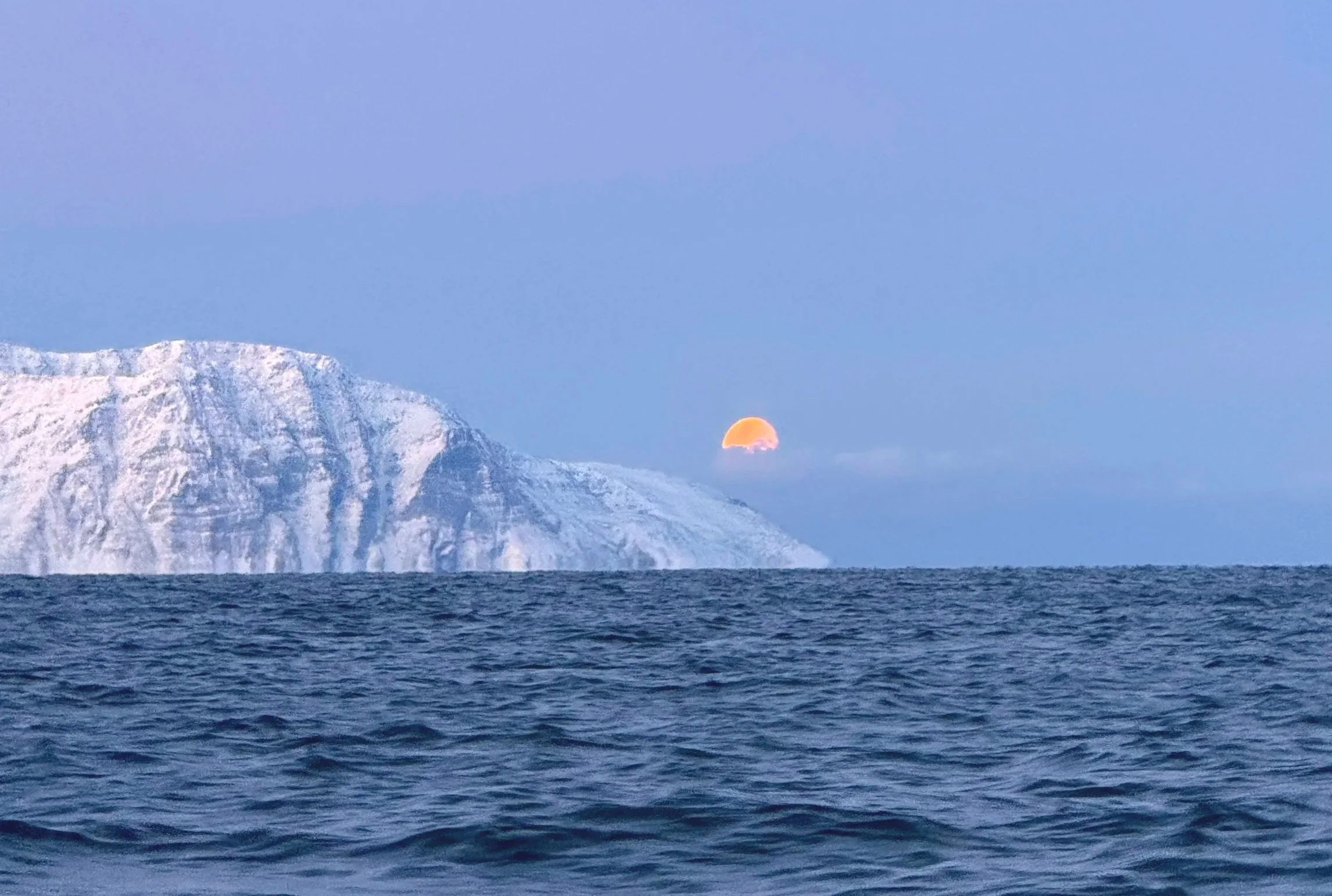
Scheduling the whale safari on our final full day in Norway felt like a gamble. Arctic weather changes by the hour, and if conditions had turned, there would have been no second chance. Fortunately, we couldn't have asked for a better morning. The skies were perfectly clear, and the forecast promised calm seas.
Sometimes travel rewards a little faith.
Originally, I had hoped to book a snorkeling experience with orcas, but by the time I started planning, those tours had already filled for the season. That's when I discovered Explore 70 Degrees, a small locally operated company based in Skjervøy. Rather than transporting guests from Tromsø, they focus on small-group experiences departing directly from the whales' winter feeding grounds. Their RIB boats carry a maximum of just 12 guests, allowing for a much more personal experience while emphasizing respectful wildlife viewing and animal welfare.
The RIB was exactly what drew me in.
It wasn't a large sightseeing vessel.
It was a sturdy inflatable boat designed to get us safely as close as possible to the wildlife while still respecting the animals' space.
Although the drive north took place almost entirely during Polar Night, it was far from pitch black. The snow-covered mountains glowed against the deep blue Arctic sky, their outlines illuminated by the soft twilight unique to Northern Norway. We passed quiet fishing villages, frozen fjords, and countless boats waiting patiently in tiny harbors before finally arriving in Skjervøy.
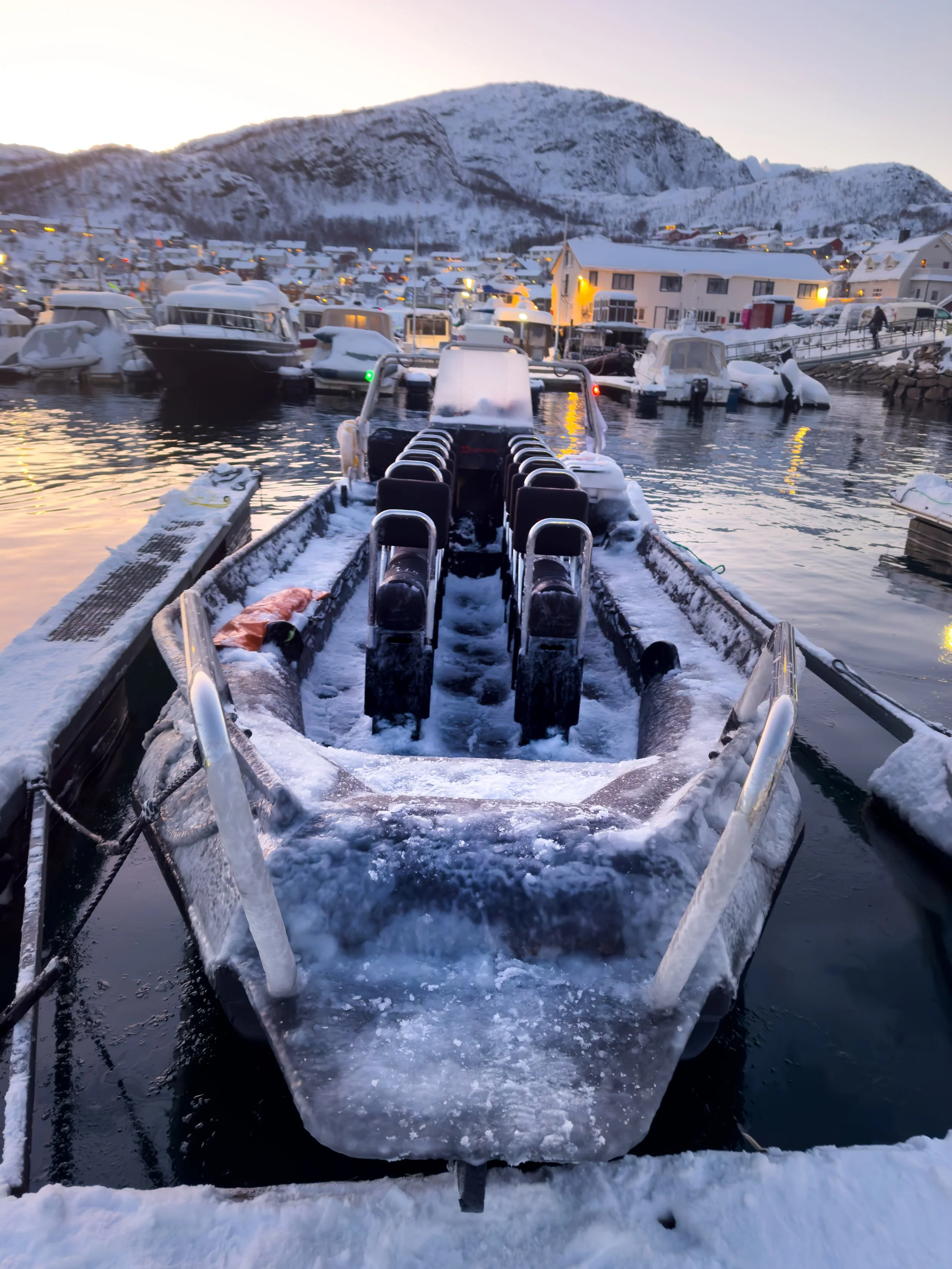
RIB Boat
After a safety briefing and introduction from our guides, we suited up in insulated flotation suits, heavy boots, mittens, goggles, and life jackets before making our way to the harbor.
Waiting for us at the dock was our boat.
Completely covered in ice.
I couldn't stop smiling.
Some people might have seen an inconvenience. I saw the beginning of an Arctic adventure.
Before boarding, I made one silent request to the universe.
I'd been on two whale watching tours before.
I'd never actually seen a whale.
Maybe today would be different.
As we pulled away from the harbor, it quickly became clear we had been incredibly lucky with the weather. The moon hung low above the mountains while the horizon glowed with soft shades of pink, orange, and lavender. The water was remarkably calm, reflecting the colors of the Arctic sky in every direction.
Then, almost immediately...
Someone pointed.
A humpback whale surfaced off our port side.
Then another.
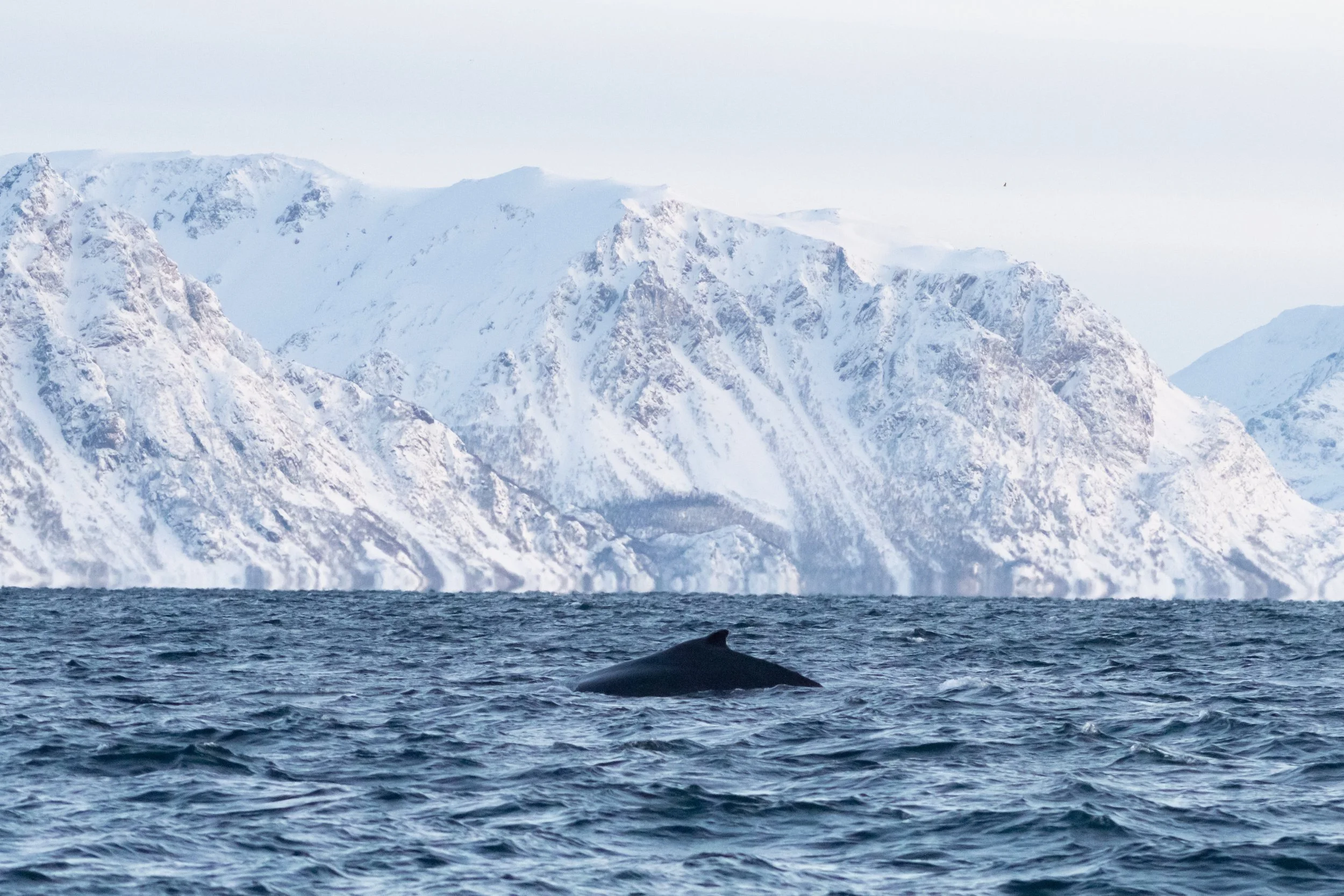
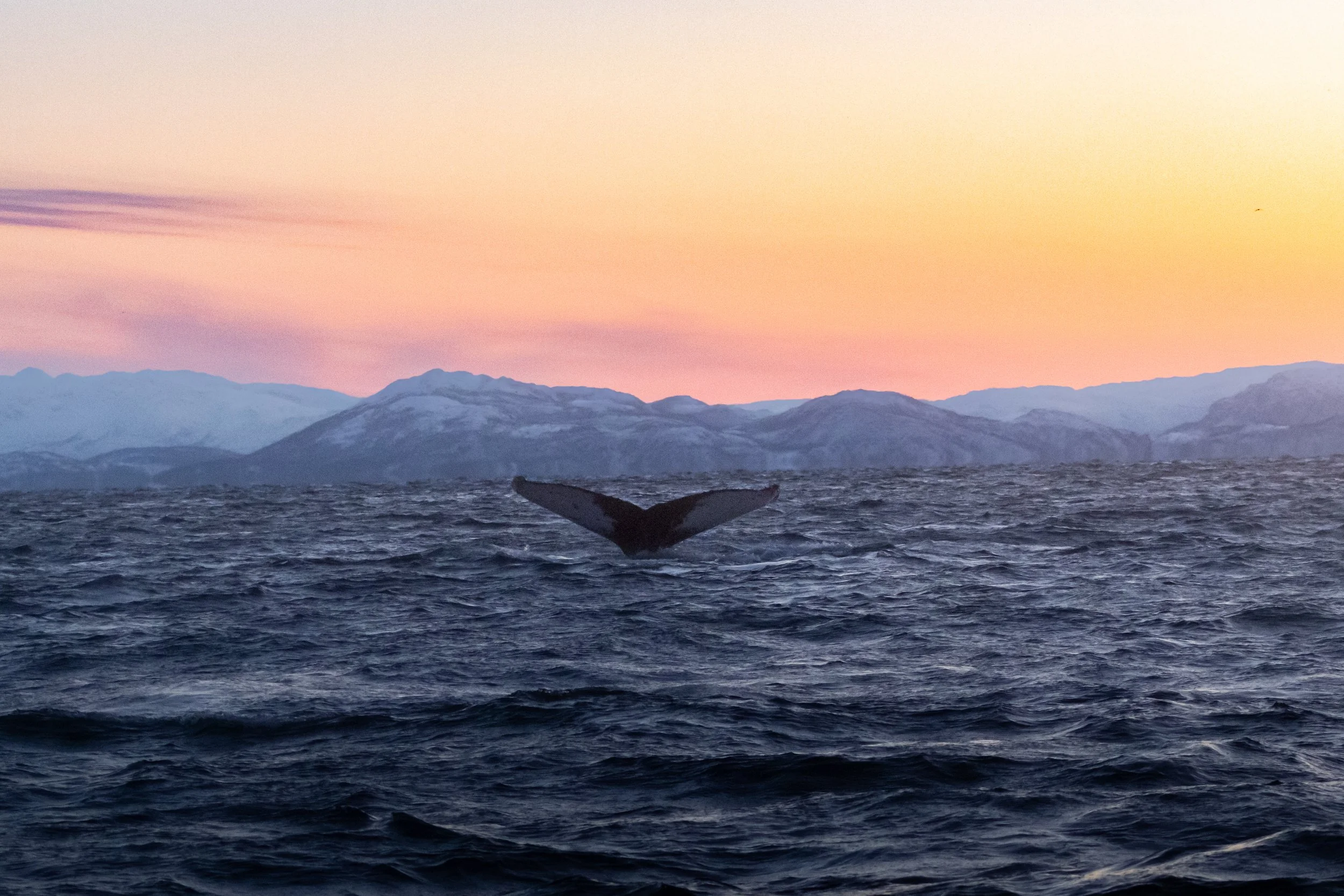
Watching a humpback whale emerge from the water for the very first time is difficult to describe. They are so much larger than your brain expects them to be. Their backs seem to rise forever before disappearing beneath the surface, often ending with the unmistakable lift of a massive tail.
We spent time quietly observing them before our guides noticed movement farther across the water.
Orcas.
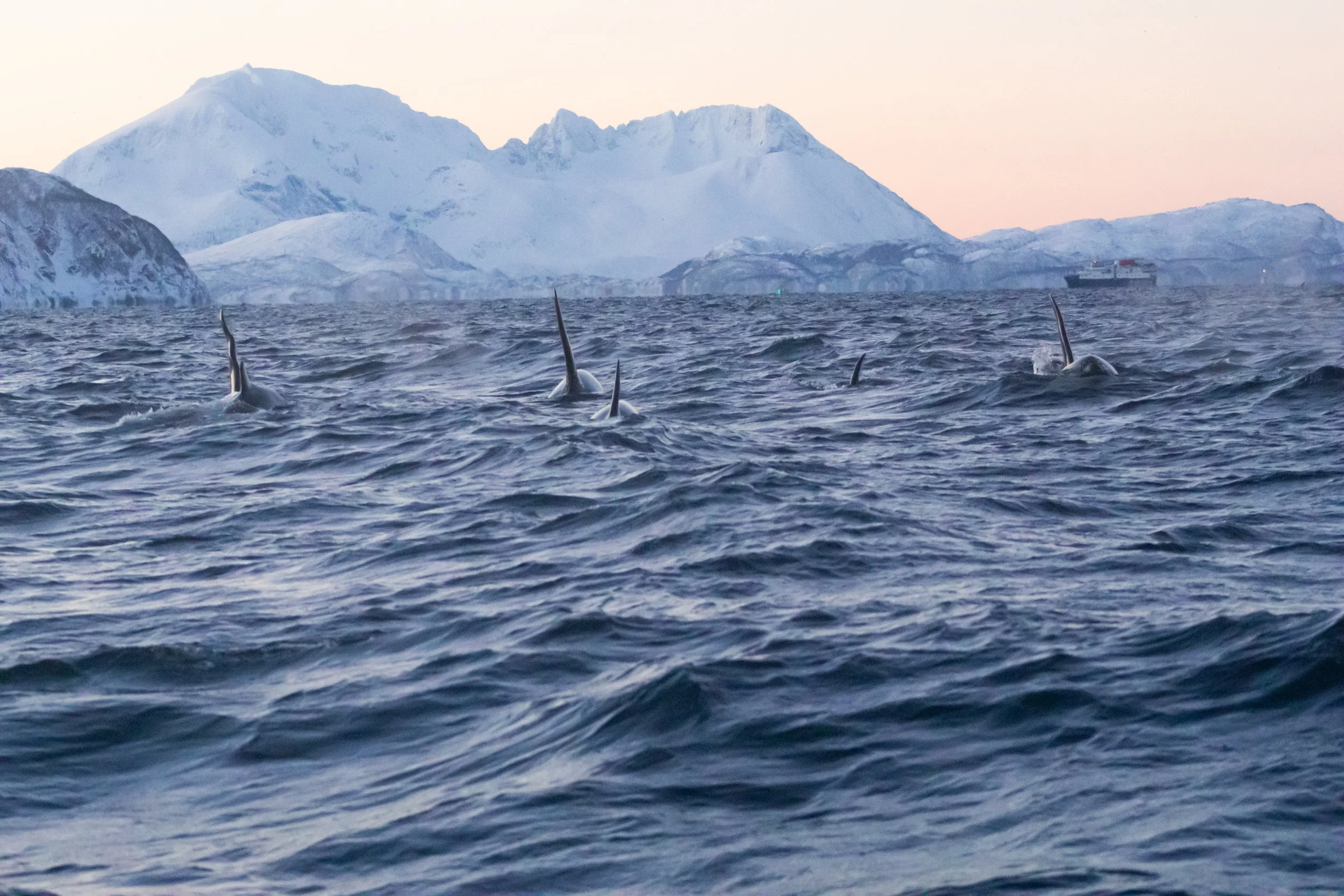
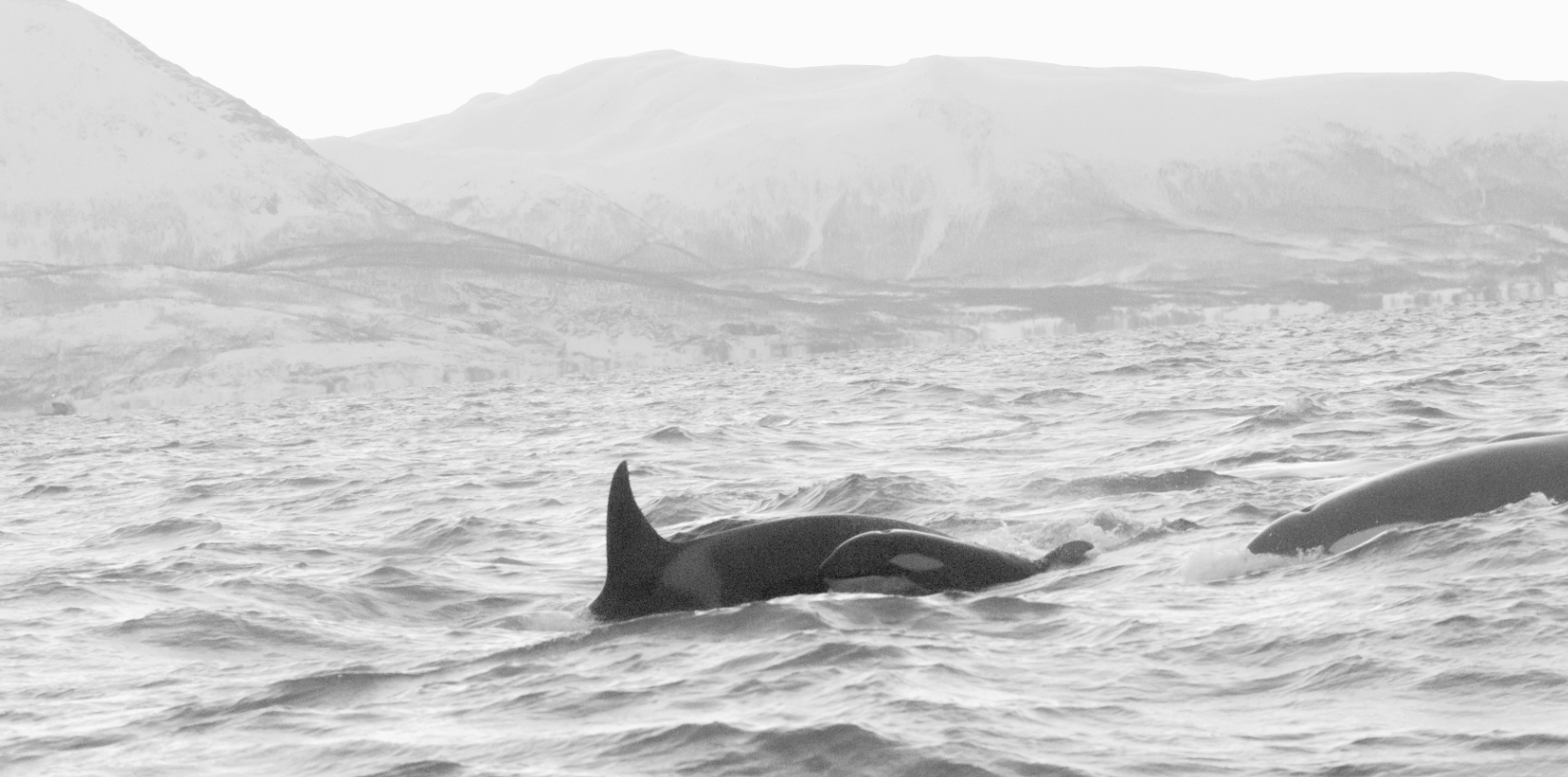
Within minutes, we found ourselves surrounded by a pod of killer whales.
Several calves swam alongside the adults, their smaller dorsal fins making them instantly recognizable. Unlike the humpbacks, the orcas moved with incredible speed and curiosity. They surfaced frequently, often much closer to the boat, weaving effortlessly through the wate.
For the next several hours, we drifted between humpback whales and orcas, listening as our guides explained their behavior, migration patterns, family structures, and the unique ecosystem that brings them to Northern Norway each winter. Their knowledge of the region and obvious respect for the wildlife made the experience feel just as educational as it was exciting.
Because we were aboard such a small boat, every encounter felt personal.
There were no crowds fighting for rail space.
No engines drowning out the sounds of the sea.
Just twelve people floating quietly among some of the ocean's most extraordinary animals, surrounded by snow-covered mountains in every direction.
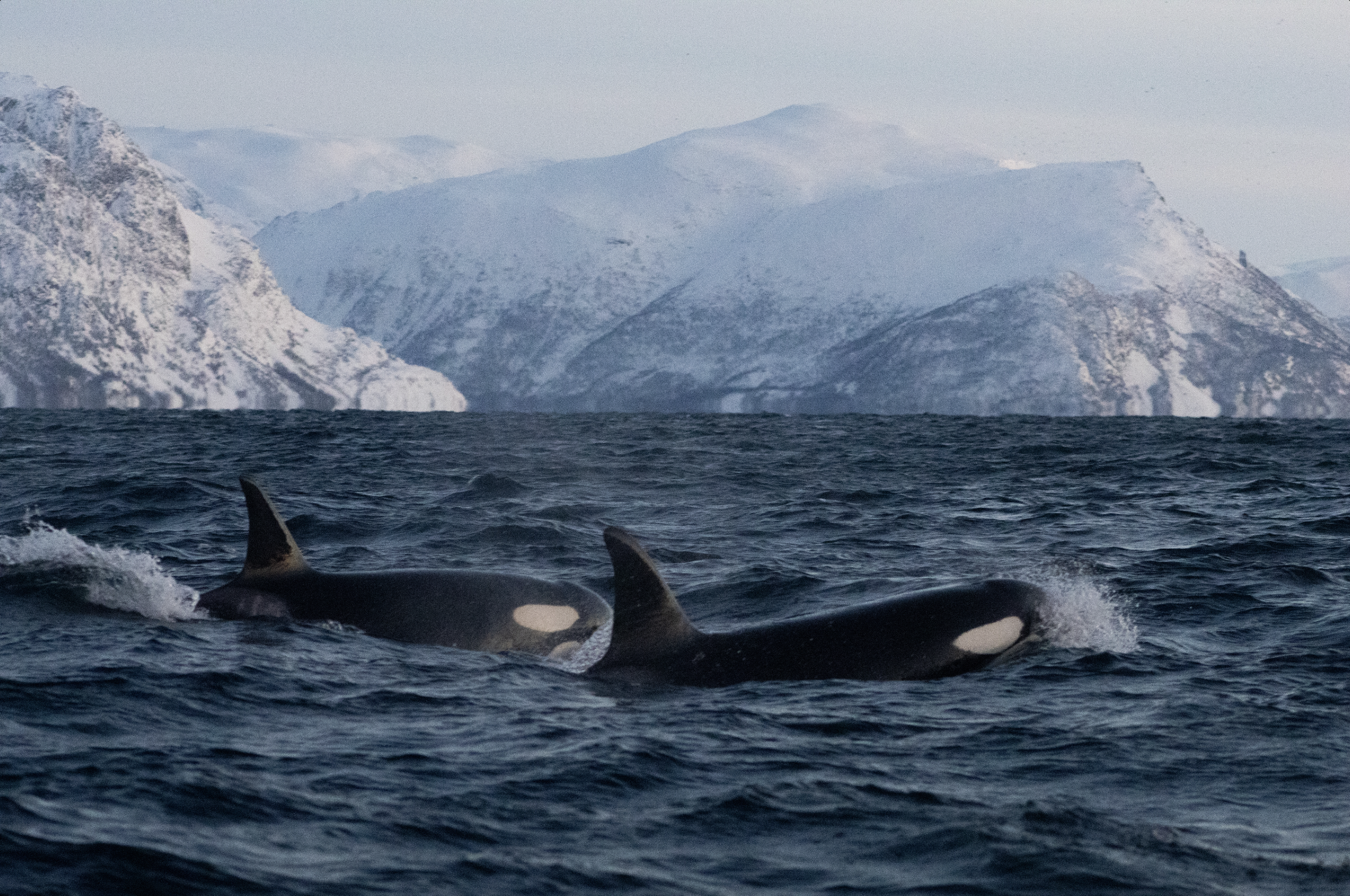
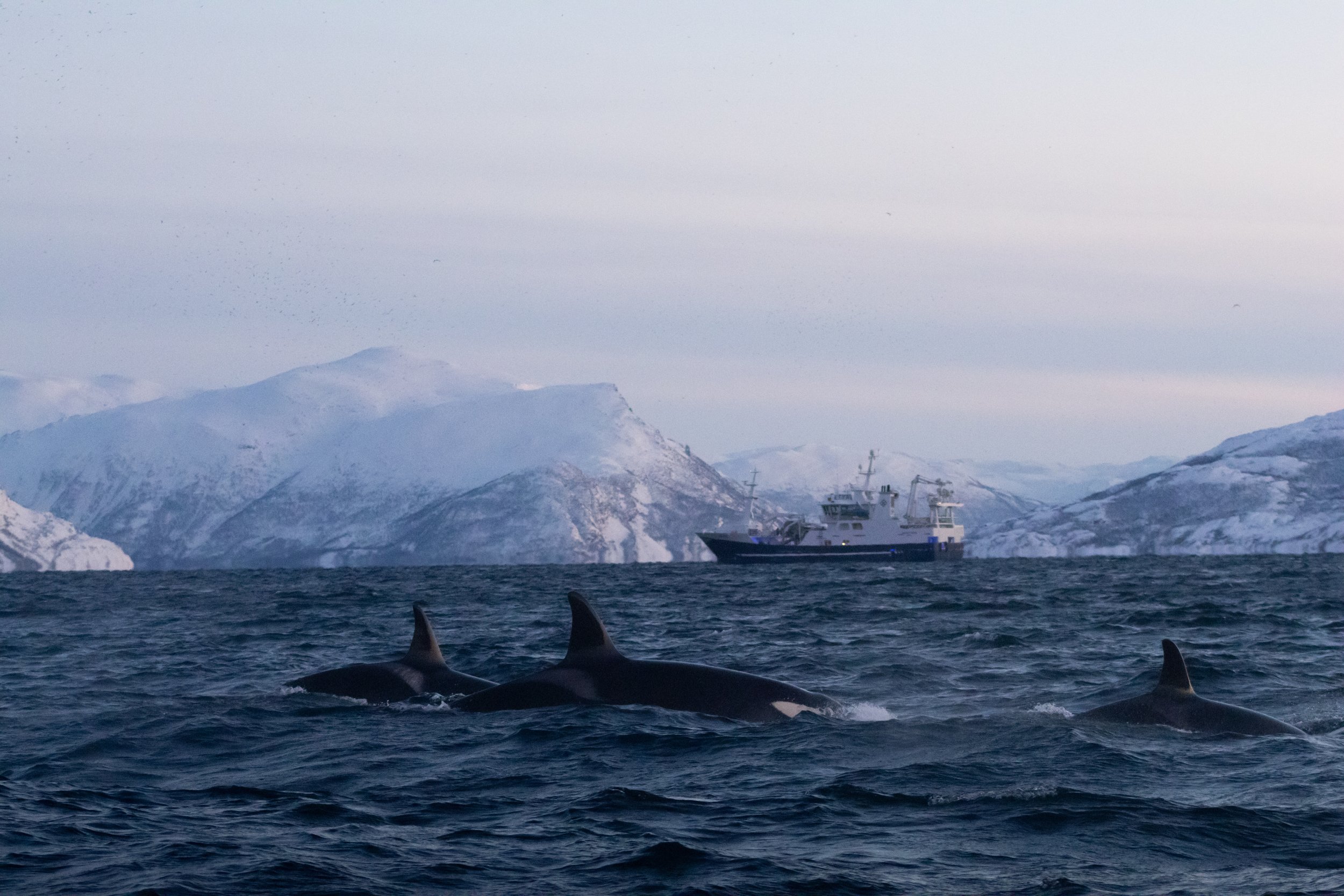
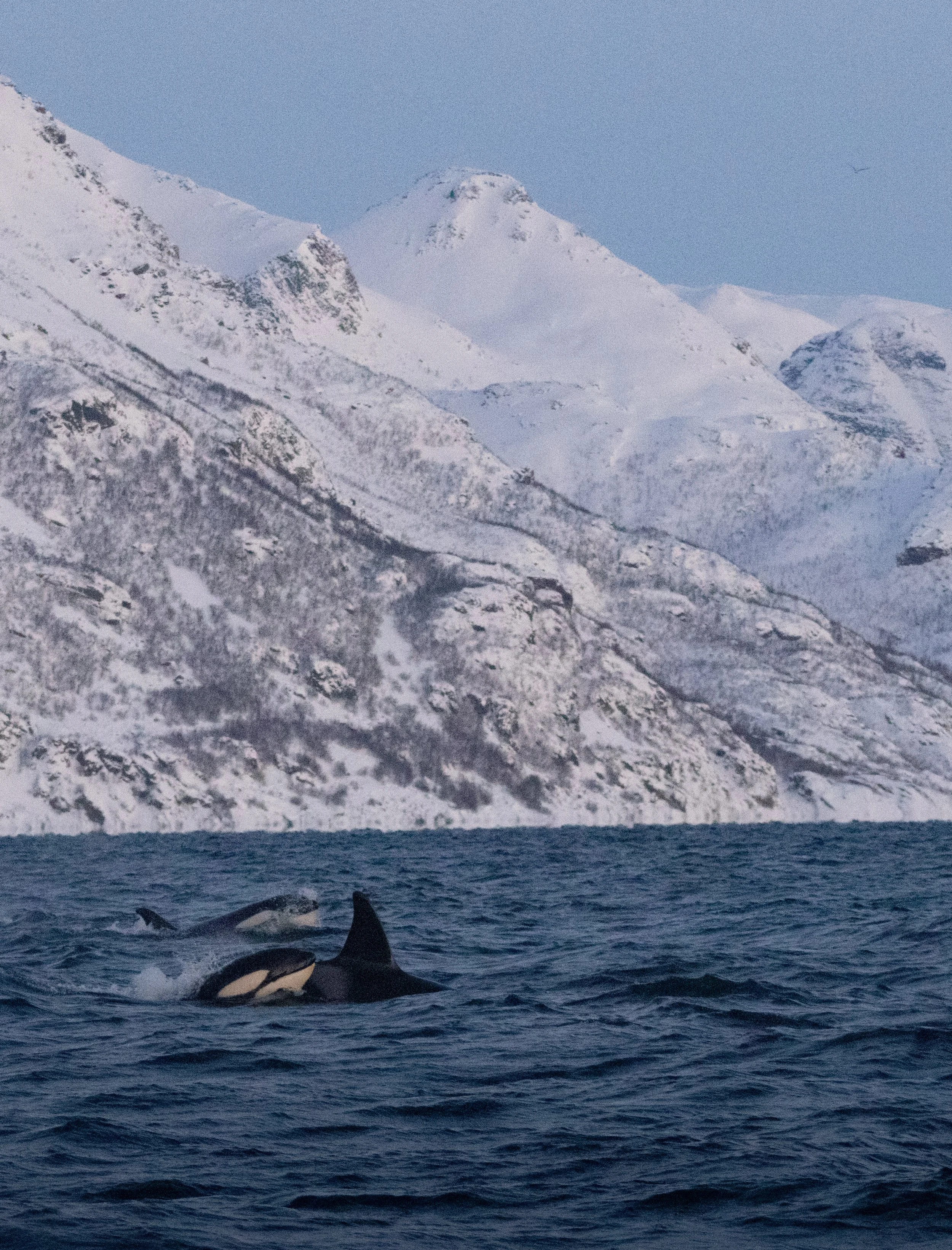
By the time we returned to Skjervøy four hours later, my cheeks were frozen, my camera was nearly full, and my expectations had been completely exceeded.
It wasn't just the best whale watching experience I've ever had.
It was one of the greatest wildlife encounters of my life.
If you're deciding between departing from Tromsø or making the drive to Skjervøy, I would choose Skjervøy every single time. Yes, it requires an early morning and several hours in the car, but the smaller boats, shorter ride to the whales, intimate group size, and exceptional guides made it one of the most memorable experiences of our trip to Northern Norway.