3 Days, 2 Nights on the Continental Divide Trail to Logan Pass - July 2024
After several years of entering Glacier National Park's highly competitive backcountry permit lottery, we finally received the email we'd been hoping for. Our excitement lasted about five minutes before we realized our permit selection time was later than we'd hoped. Most of the campsites on Glacier's iconic North Circle Loop had already been claimed, leaving us to get a little creative.
Instead of following one of Glacier's classic routes, we pieced together our own three-day, two-night point-to-point itinerary beginning near St. Mary on the east side of the park and finishing in Two Medicine. Looking back, I'm grateful things worked out the way they did. It became the perfect introduction to both Glacier National Park and backpacking.
It was July 2024, and my boyfriend and I had planned the trip to celebrate our three-year anniversary. Neither of us had ever backpacked in Montana before, and for me, this was an even bigger milestone. This would be my first time navigating permits, planning mileage, carrying everything I needed, and making decisions in the backcountry entirely on our own.
It was equal parts exciting and intimidating.
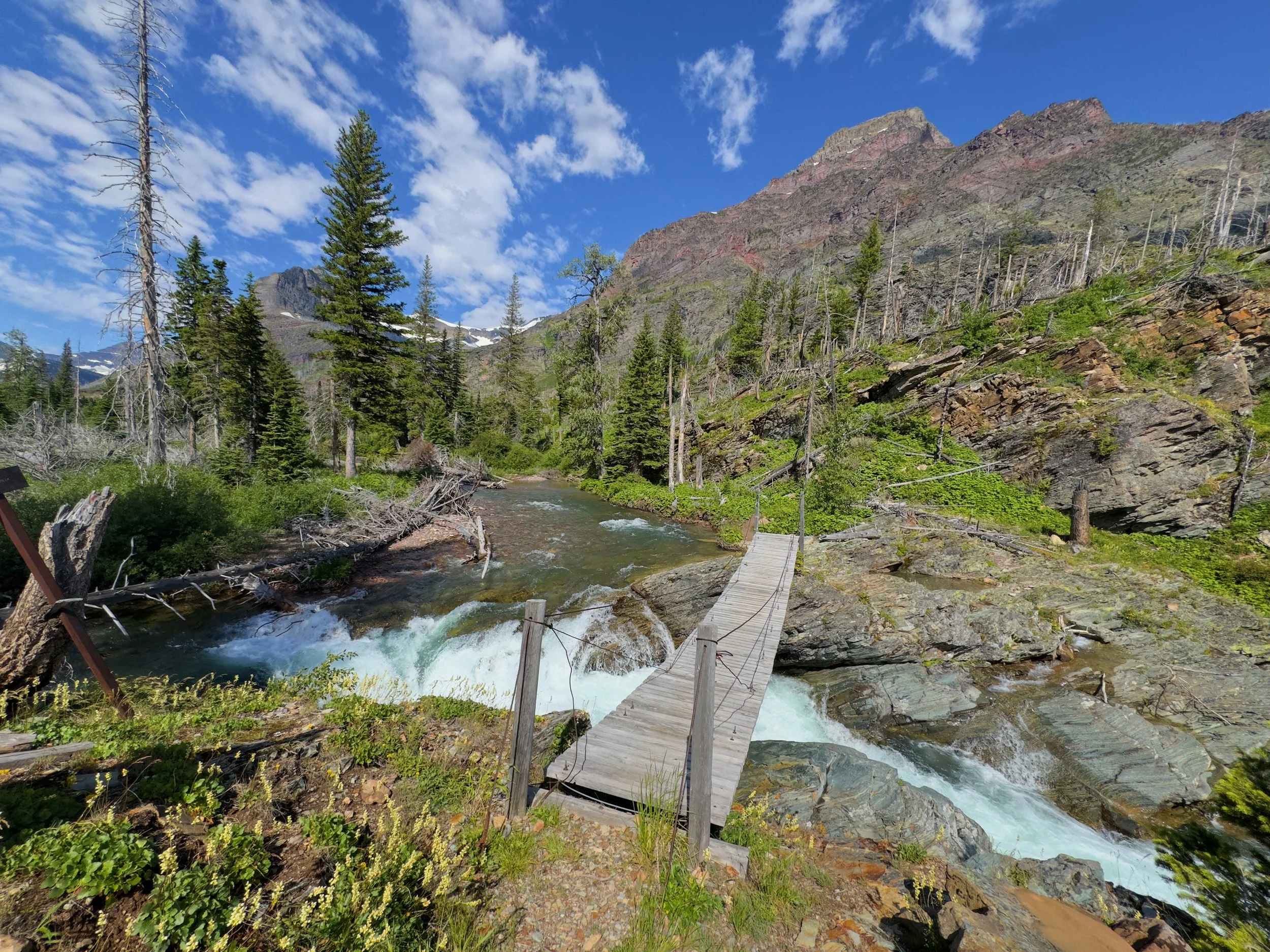
We began at St. Mary, following the Continental Divide Trail toward Red Eagle Lake Head. The trail eased us into Glacier's vastness with long stretches of forest, crystal-clear rivers, and occasional openings that revealed towering peaks in every direction. Wildlife signs were everywhere, reminding us that this wasn't just our adventure. We were guests in one of the wildest landscapes remaining in the lower 48.
Toward the end of the first day, the scenery changed dramatically.
The forest disappeared.
Standing before us was a burn scar unlike anything I had ever witnessed.
For mile after mile, blackened tree trunks stretched toward the sky like silent monuments. Entire hillsides had been transformed into fields of gray skeletons, with almost no living trees left standing. It was simultaneously heartbreaking and strangely beautiful.
At first, I couldn't stop looking at the devastation.
Then I started noticing something else.
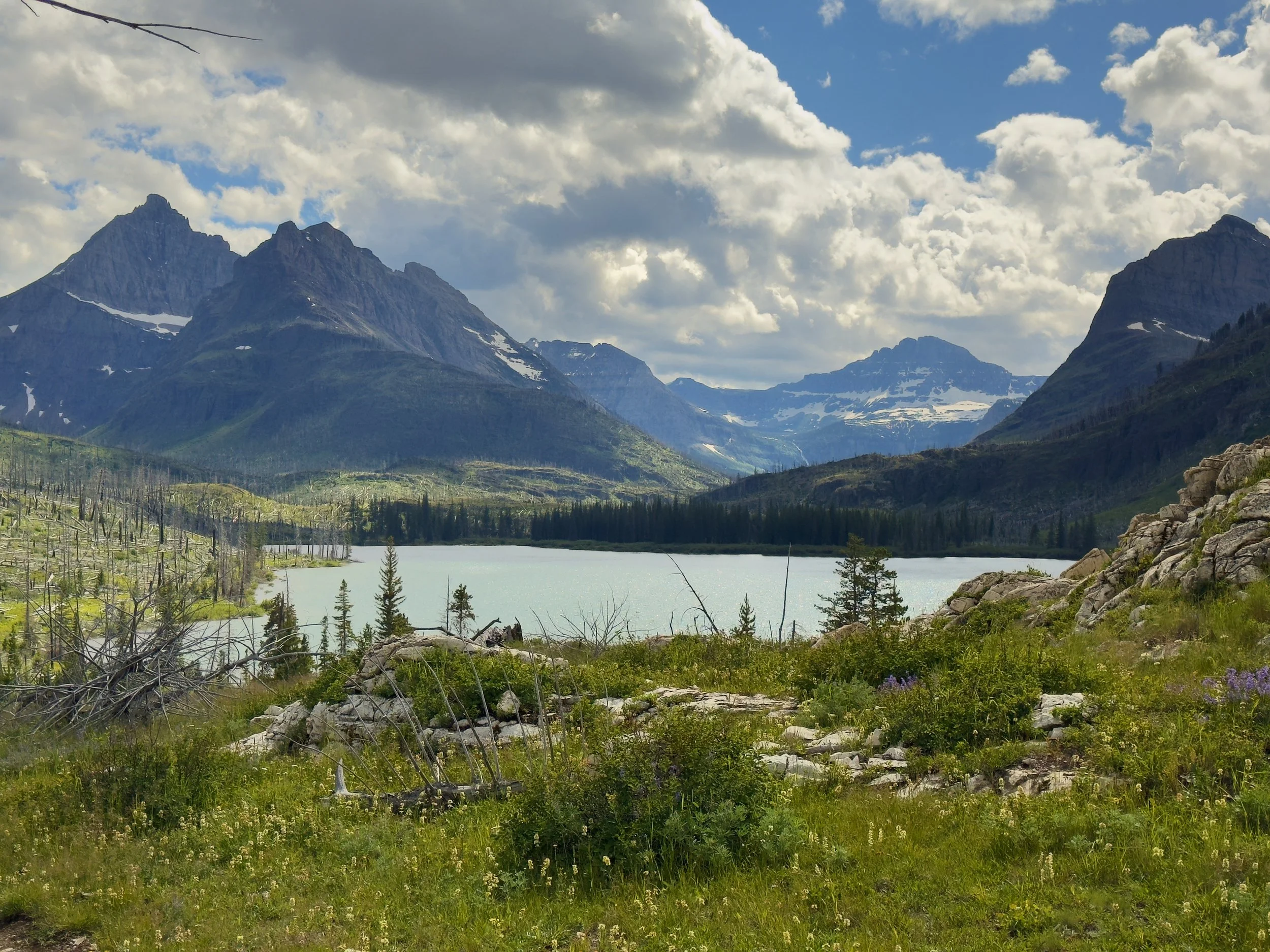
Tiny wildflowers pushed through the ash.
Bright green saplings emerged from beneath fallen trees.
Life was quietly reclaiming the landscape.
As difficult as it was to witness so much destruction, it became an unexpected lesson in resilience. Nature wasn't waiting to be repaired. It had already begun healing itself.
Mentally, however, the burn area became challenging.
After the first hour, it felt endless.
We had spent months researching Glacier National Park, reading trail reports, guidebooks, blogs, and park information. Somehow, neither of us remembered anyone mentioning that we'd spend such a significant portion of our first and second day hiking through the aftermath of a wildfire.
Only after returning home did I learn that much of what we had crossed was burned during the 2010 Red Eagle Fire. Lightning ignited the fire during an exceptionally dry summer, and over the following weeks it burned roughly 32,000 acres on Glacier's east side. Rather than aggressively suppressing it in the remote backcountry, the National Park Service allowed much of the fire to burn naturally, recognizing wildfire as an essential part of the ecosystem. While difficult to experience firsthand, the fire ultimately created habitat for new plant growth, improved biodiversity, and opened landscapes that had been densely forested for decades.
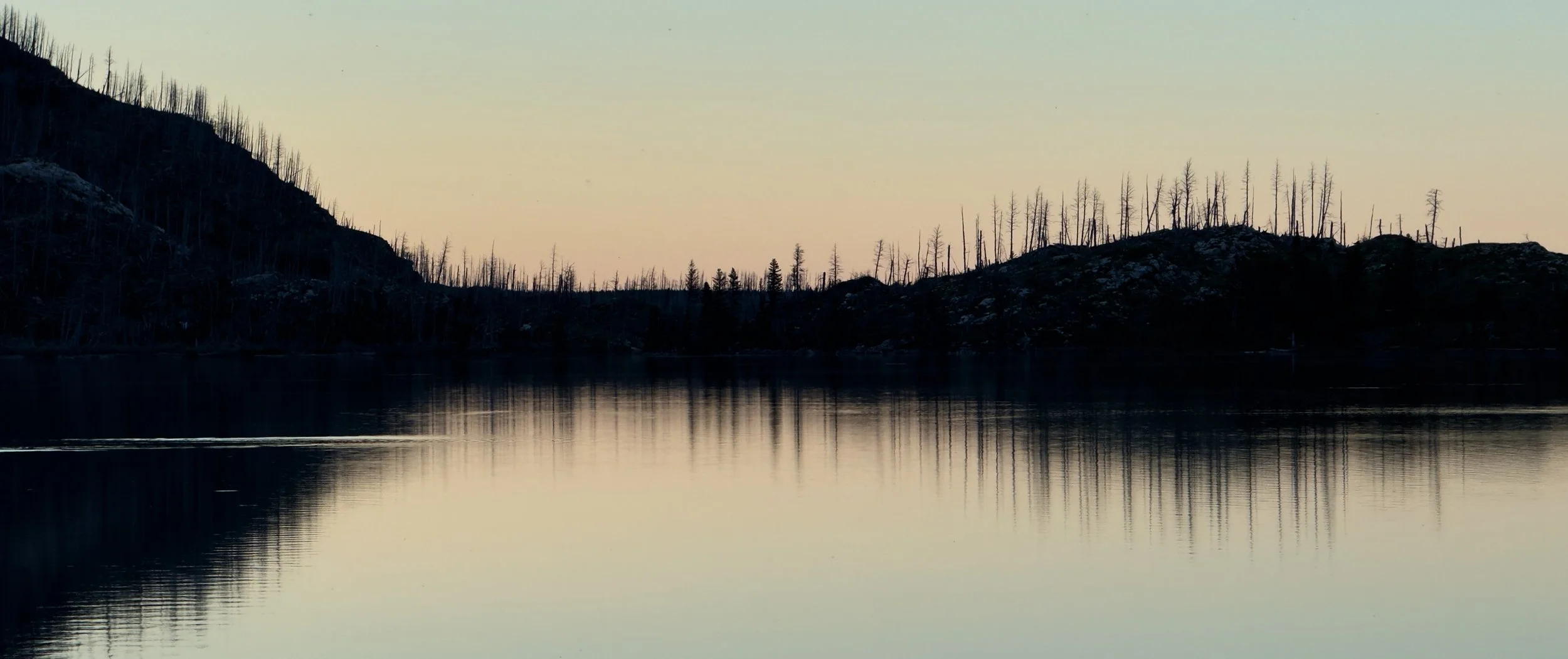
Sunset over Red Eagle Lake
It was one of those moments where perspective changed everything.
Day two brought an entirely different challenge.
As we climbed toward Pitamakan Pass, patches of snow began appearing along the trail.
Then the patches became snowfields.
We had planned for mosquitoes.
We had planned for bears.
We had not planned to hike across lingering alpine snow in early July.
Neither of us had packed microspikes or crampons, and I had never crossed snow on a mountain before.
Unlike the burn area, which eventually became an opportunity to appreciate nature's ability to recover, the snow consumed my thoughts completely.
Every step felt uncertain.
I worried constantly about slipping.
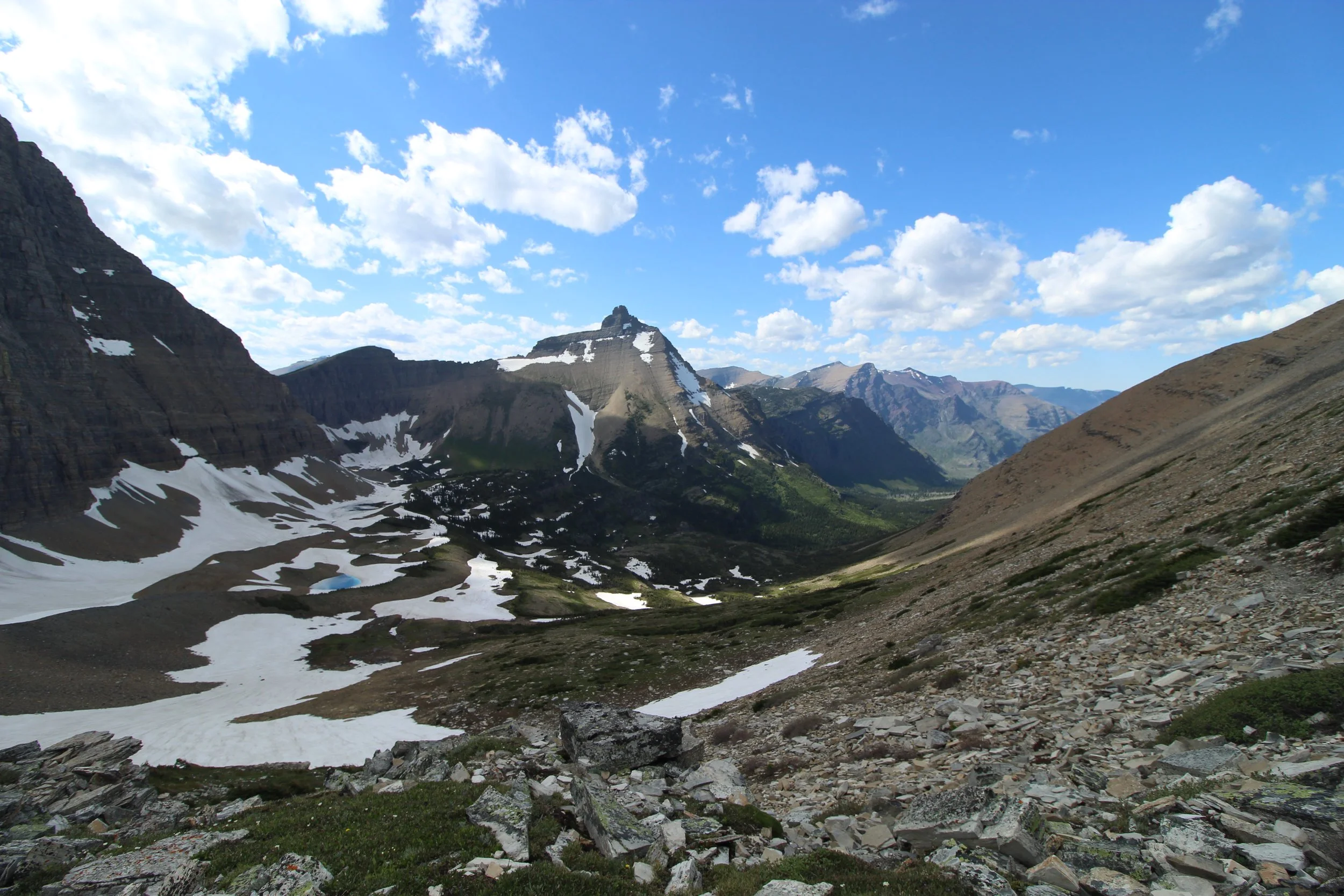
On the way up to Pitamakan Pass
Each time my foot unexpectedly punched through the crust, my heart jumped. My legs quickly grew tired from lifting my knees higher than usual and constantly searching for stable footing. Instead of admiring the scenery, I found myself staring almost exclusively at the next step.
Looking back, it probably wasn't nearly as dangerous as it felt.
But fear has a remarkable way of magnifying uncertainty.
Eventually, the snow gave way to rock, and the reward waiting on the other side made every anxious step worthwhile.
Pitamakan Pass opened into sweeping views of Glacier's dramatic peaks, deep valleys, and countless waterfalls cascading down sheer cliffs into Two Medicine Valley below. It was one of those moments where everyone naturally stopped talking.
There was nothing left to say.
The landscape spoke for itself.
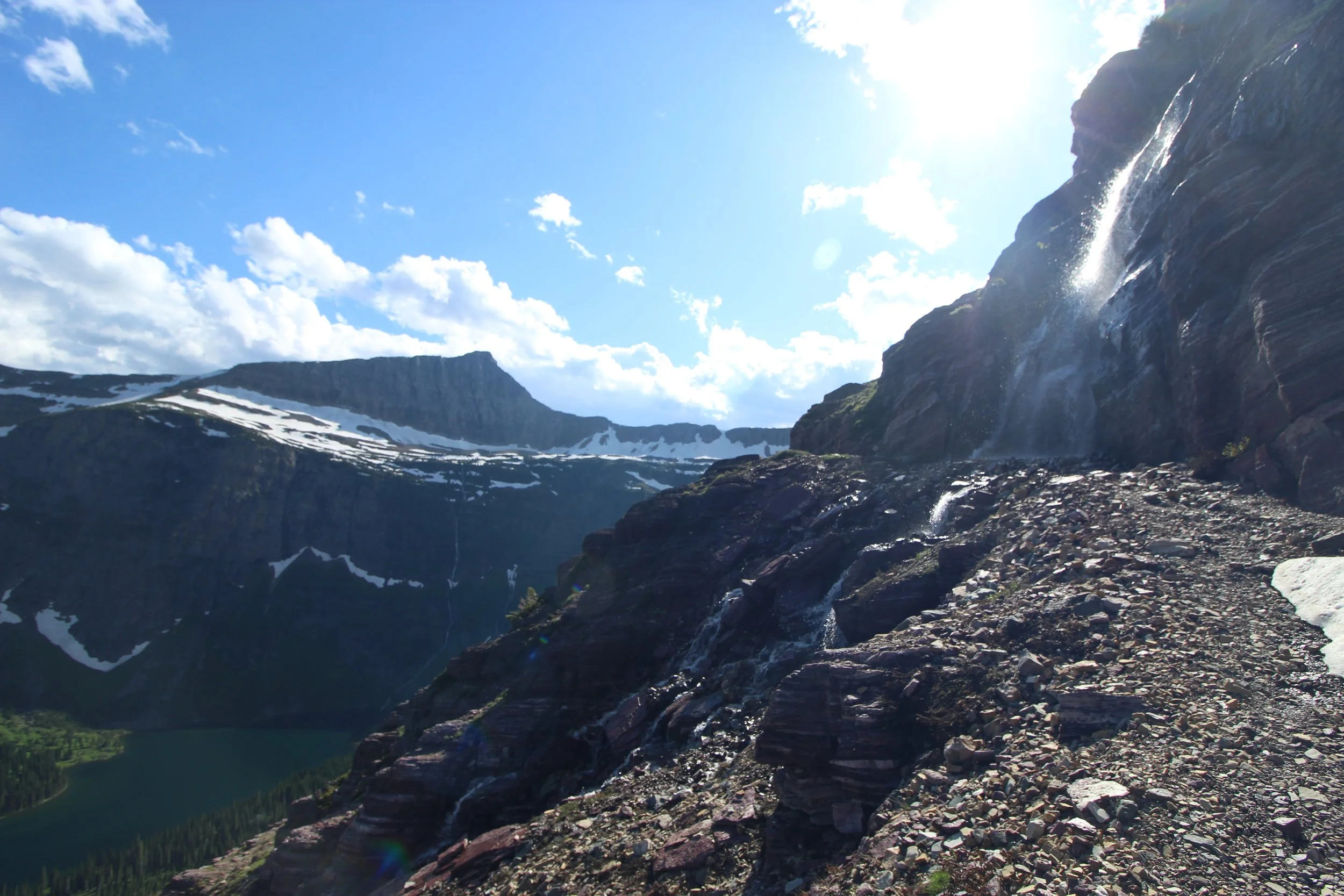
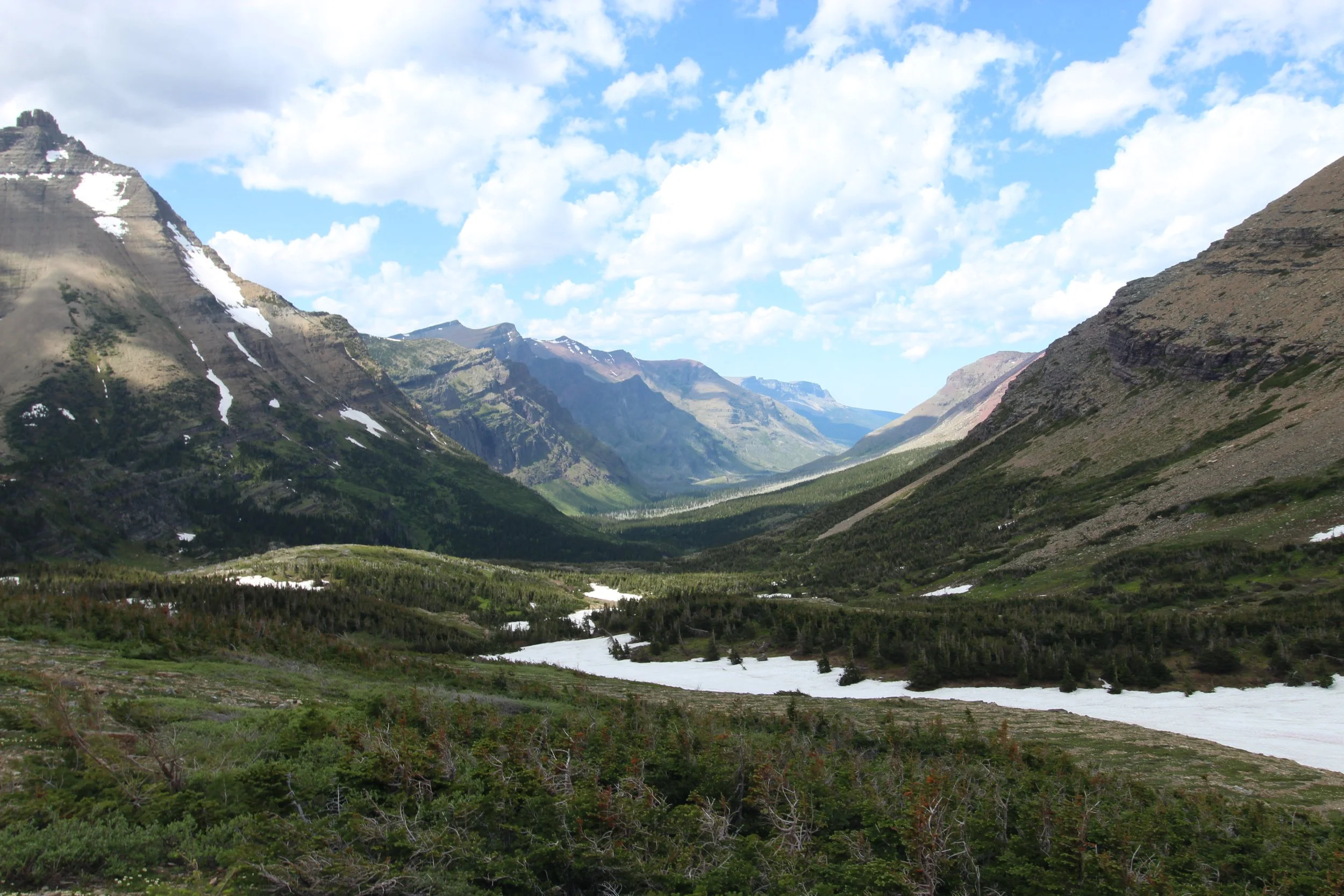
Our final miles descended into Two Medicine, where we celebrated with one last night of car camping before beginning the journey home. After several nights in the backcountry, the campground felt luxurious. We cooked dinner and watched the sun dip behind the mountains. It was peaceful, welcoming, and the perfect way to end the trip.
Looking back, this route ended up being exactly what I needed.
It challenged me without overwhelming me.
It introduced me to snow travel, route planning, and the realities of backcountry hiking.
It showed me both the incredible power of wildfire and the equally incredible resilience of nature.
Most importantly, it gave me confidence.
Confidence that I could figure things out even when conditions weren't exactly what I expected.
Confidence that uncertainty wasn't something to avoid, but something to learn from.
That three-day backpacking trip didn't just introduce me to Montana.
It completely changed the way I thought about adventure.
Before this trip, backpacking was something I enjoyed.
After this trip, it became something I couldn't stop thinking about.
It opened a door I didn't even know existed and sparked a curiosity to explore deeper into wild places, learn new skills, and continue pushing beyond what felt comfortable. Looking back now, I can trace so many of the adventures that followed, including returning to Glacier the very next year for the North Circle Loop, back to these three unforgettable days on the Continental Divide Trail.