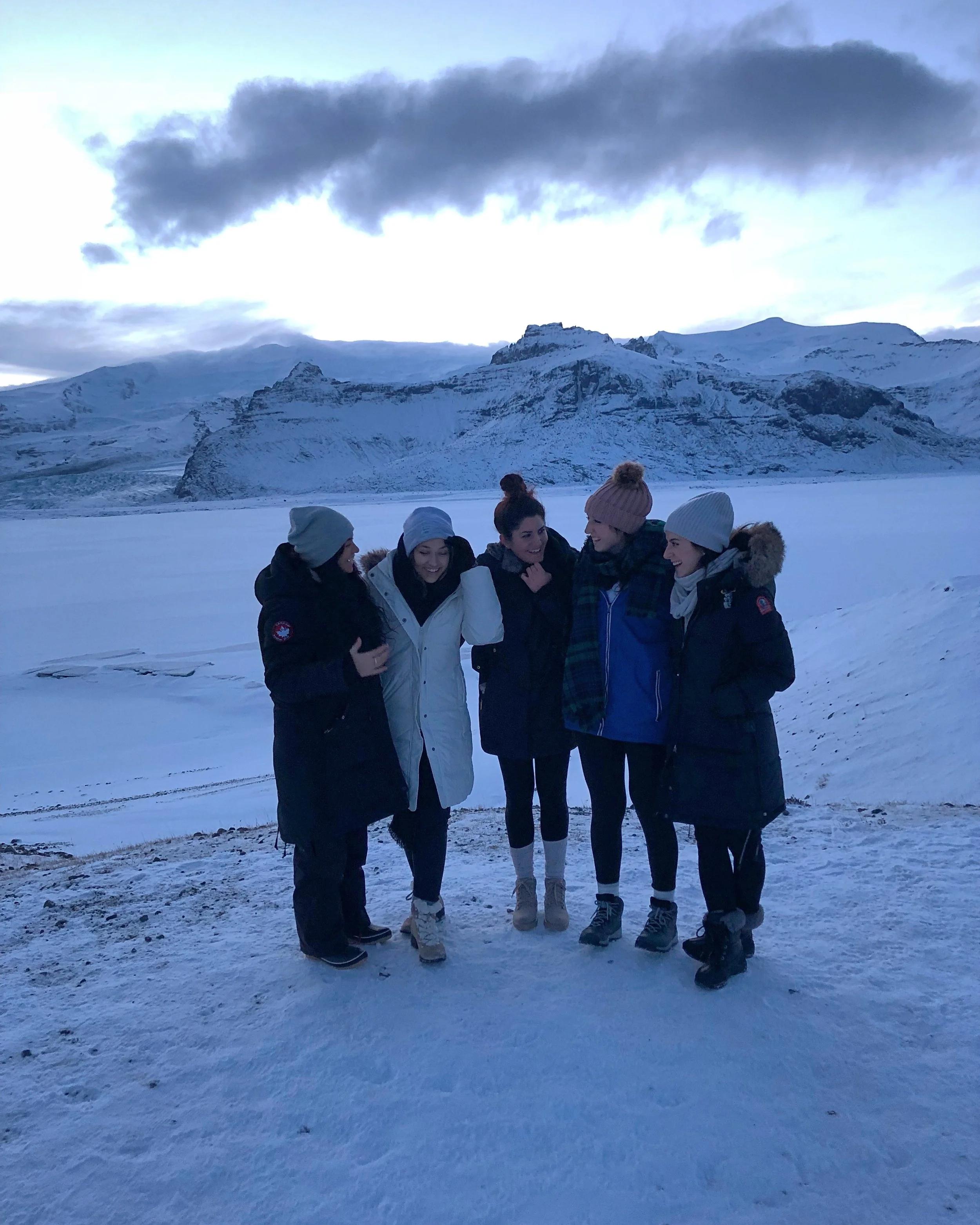
The Day We Almost Became an Icelandic Weather Statistic - February 2018
Looking back, the fact that we made it to Iceland at all feels like a small miracle.
There were five of us gals on the trip, all 23 years old and convinced we were far more prepared for adventure than we actually were. The biggest victory happened before we even left the United States: somehow convincing my friend Jordan to get on an airplane. To this day, I don't know how we pulled it off. Jordan is deeply terrified of flying and generally avoids airplanes at all costs. The last time she had willingly boarded one was a mystery to all of us.
Yet there she was, sitting on a now-defunct WOW Air flight bound for Iceland, proving that friendship, alcohol and peer pressure can accomplish remarkable things.
By day three of our trip, we had settled into a routine of maximizing every precious hour of daylight. February in Iceland offers only about five or six hours of sunlight each day, with the sun rising around 10 a.m. and disappearing again by 3 or 4 p.m. If you wanted to see anything, you had to be strategic.
That morning, we left our Airbnb long before sunrise and headed east on Route 1, better known as the Ring Road, the highway that circles the entire island. The drive to Jökulsárlón Glacier Lagoon and Breiðárlón would take roughly four and a half hours without stops, but in Iceland, driving anywhere without stopping every twenty minutes is impossible.
The landscape changed constantly. One moment we were passing black volcanic rock fields that looked like the surface of another planet. The next, we were surrounded by flat stretches of snow-covered sand, dramatic cliffs, glaciers, or icy ocean views. Route 1 itself was surprisingly simple: one lane in each direction cutting across some of the most remote terrain imaginable.
Along the roadside stood thousands of reflective marker poles spaced every few hundred feet apart. At the time, they seemed like an odd design choice.
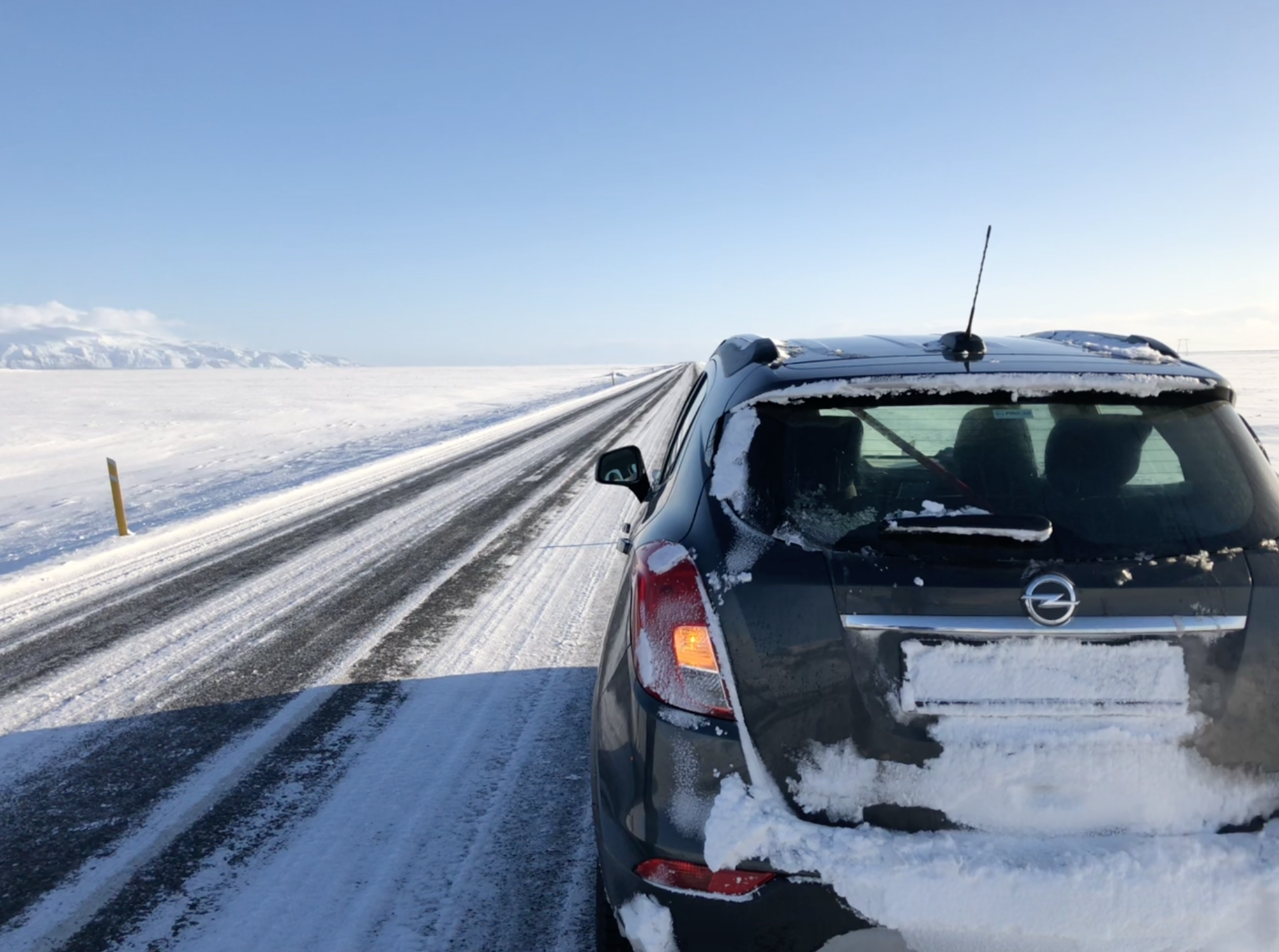
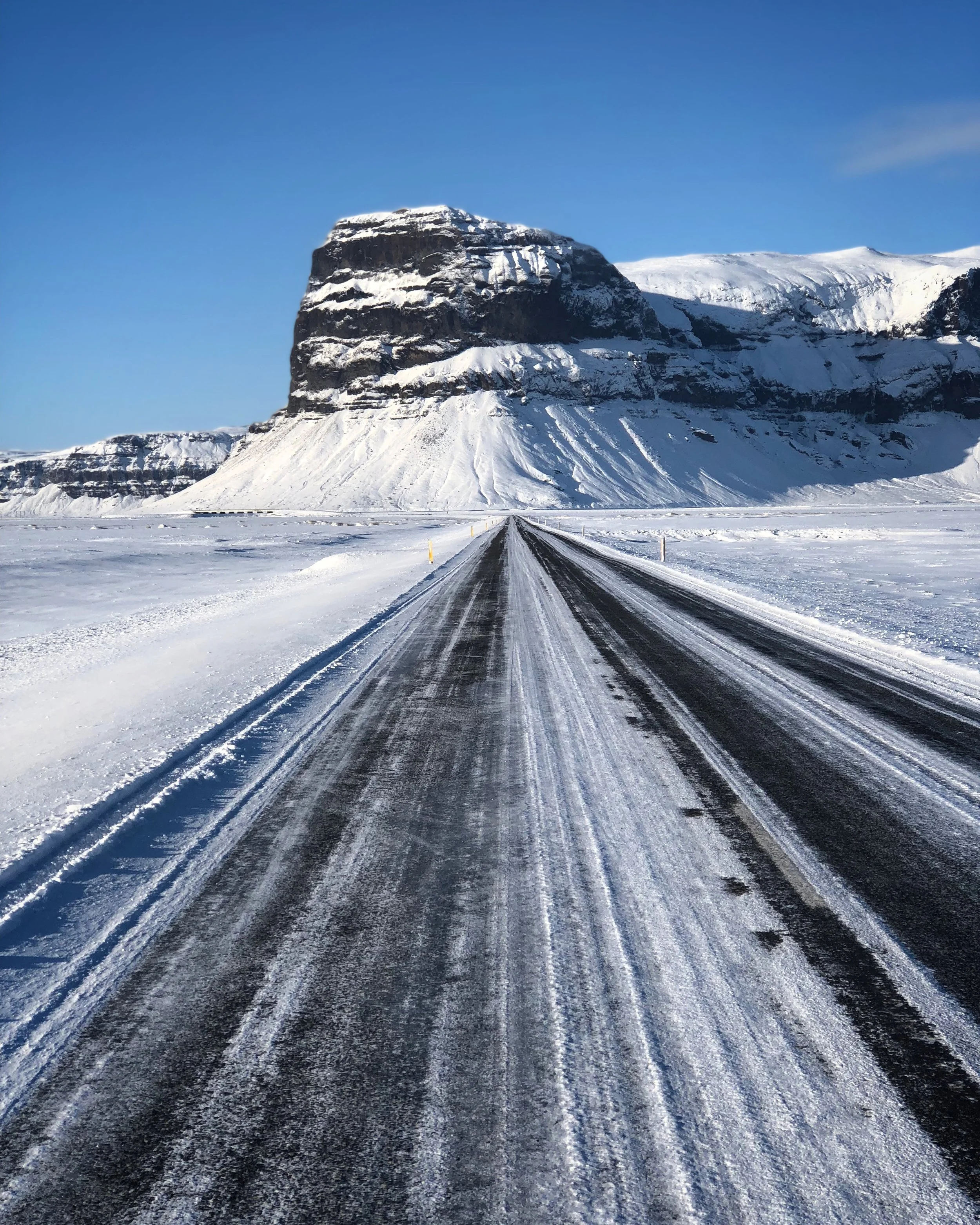
Later, they would become the only reason we made it home.
Upon arriving at the glacier lagoon, we discovered a small problem.
I had booked our ice cave tour for the wrong day.
Whoops.
After a few minutes of panicked explaining and apologizing, the tour company somehow found room for all five of us on the final tour of the afternoon; a travel miracle.
The tour itself was incredible.
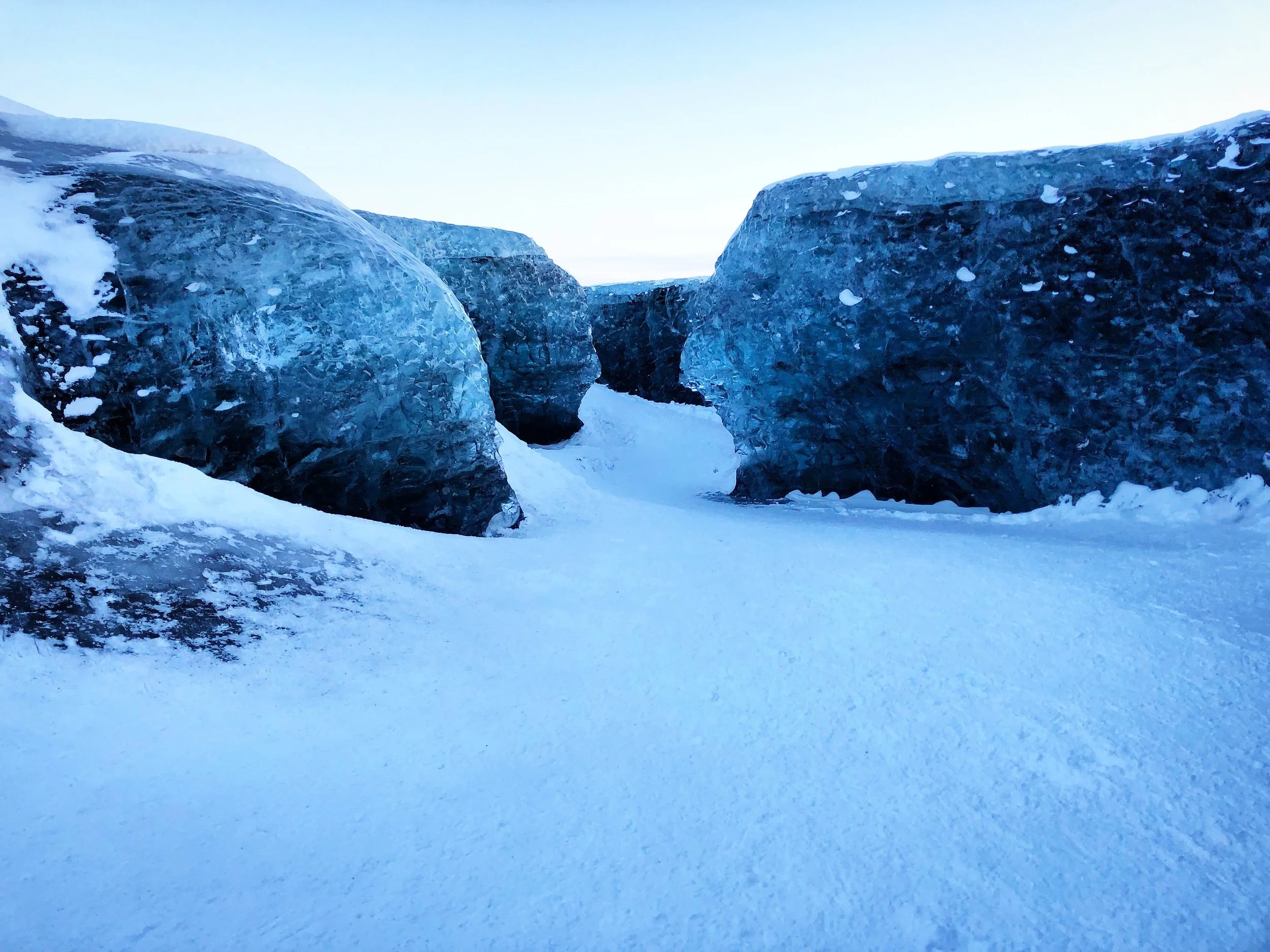
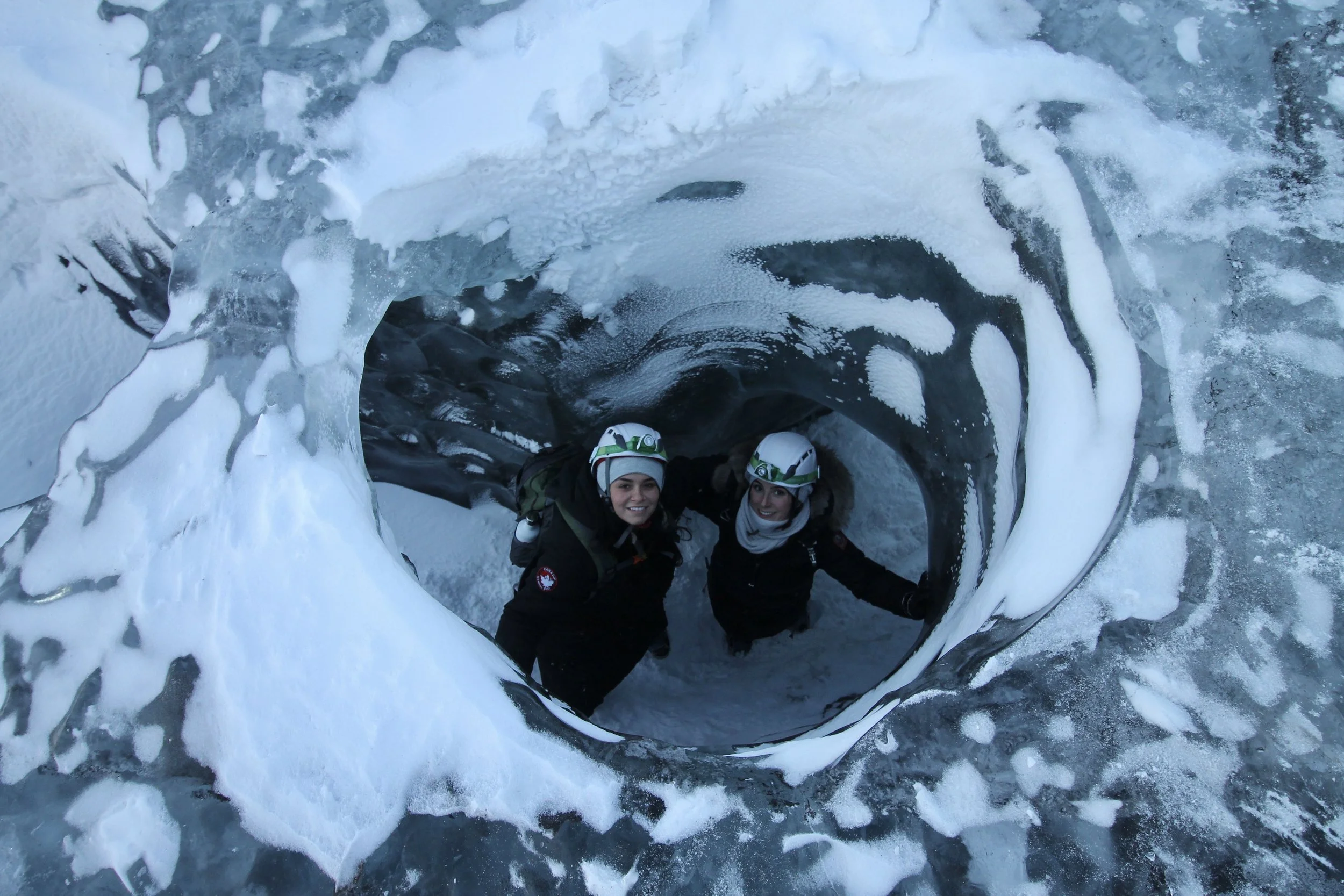
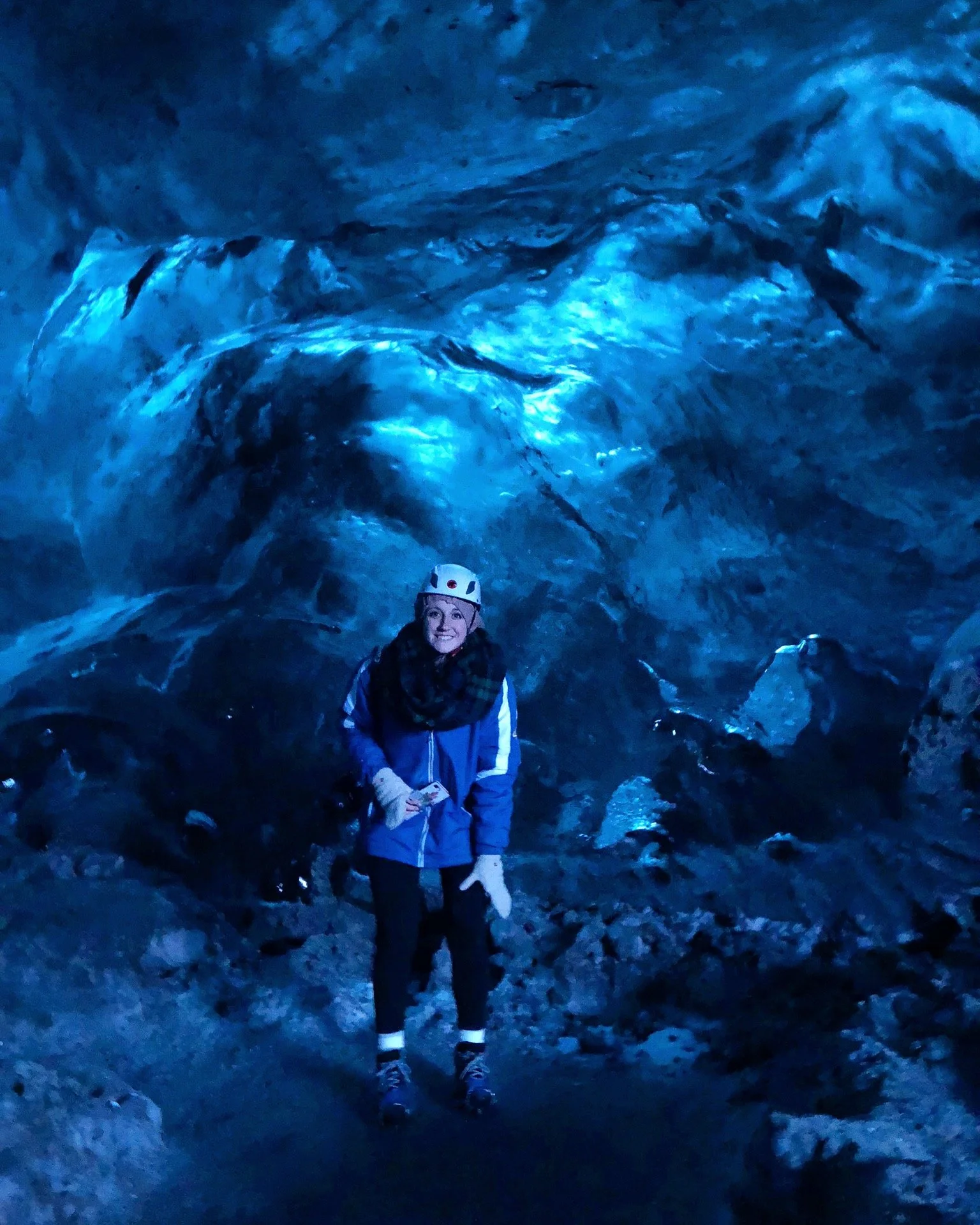
Ice caves are among the most temporary wonders on Earth. Most form seasonally as meltwater carves tunnels through ancient glacial ice, only to collapse, shift, or disappear entirely within a few years. The glacier feeding these caves is part of Vatnajökull, Europe's largest ice cap, containing ice that in some places is hundreds to thousands of years old.
Standing inside the cave felt like being trapped inside a giant sapphire. The walls glowed shades of blue I didn't know existed. Light filtered through layers of compressed ice formed long before any of us were born. Everything felt impossibly still.
As we prepared to leave, one of the guides casually mentioned that a bit of "passing snow" was expected later in the evening.
Anyone who has spent time in Iceland knows that Icelanders have a unique relationship with weather. What they describe as "a bit of weather" would often qualify as a natural disaster elsewhere.
We didn't know that yet.
At around 4 p.m., we started the drive back.
Four hours. No problem.
Within thirty minutes, everything changed.
The snow arrived suddenly and with unbelievable force. Visibility dropped from miles to yards in a matter of minutes. Every few moments, violent gusts would sweep snow across the road, creating a complete whiteout. We couldn't see the pavement. We couldn't see the horizon. Sometimes we couldn't even see the car directly in front of us.
Any car we saw on the road slowed to a crawl.
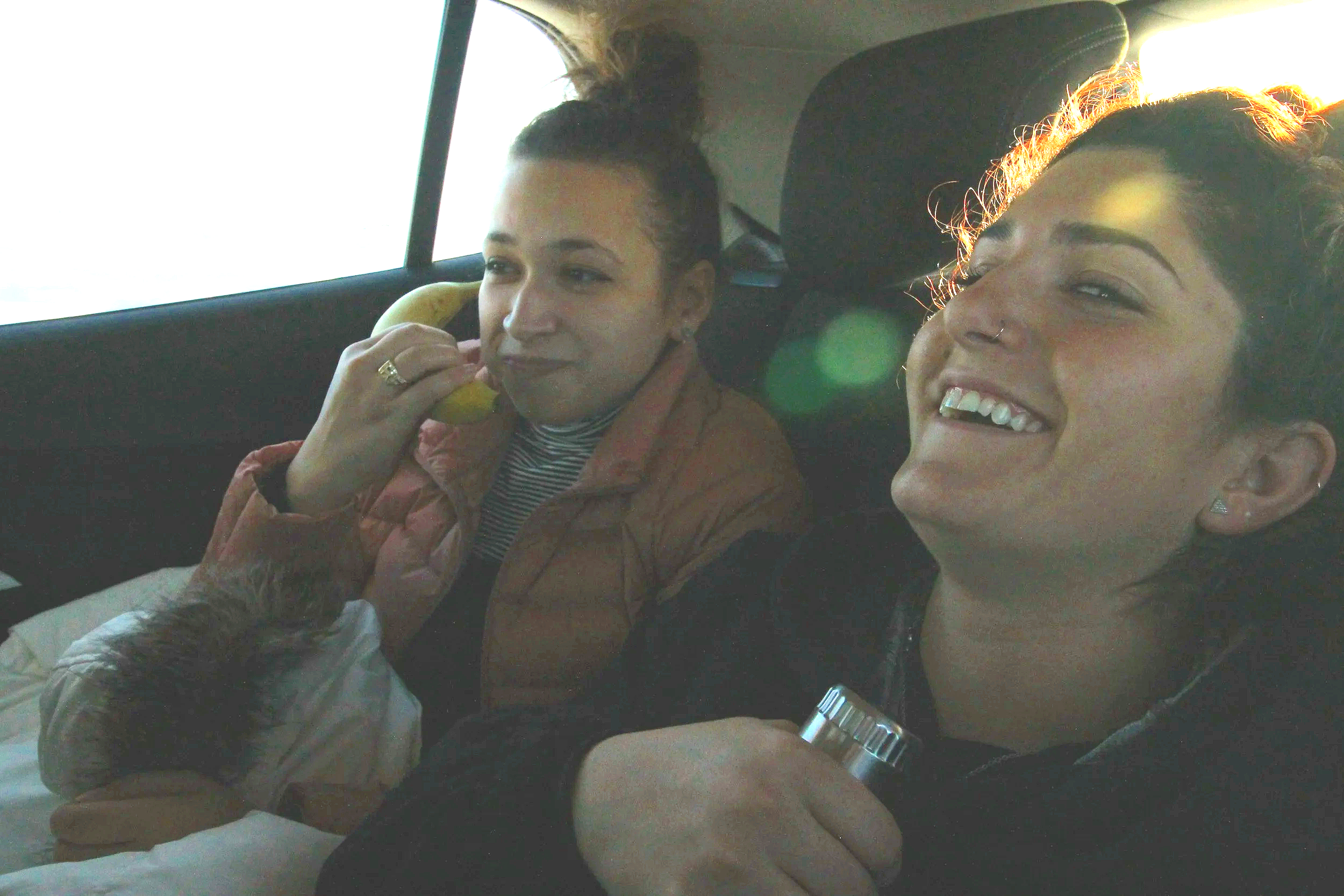
Inside our rental car, the mood shifted quickly from excitement to concern.
Then concern became anxiety.
There were no towns.
No gas stations.
No cell service.
No international phone plans.
No food.
No water.
Just five gals sitting in a rental car in the middle of an Icelandic blizzard.
In hindsight, we were remarkably underprepared.
Every few minutes we would stop completely because none of us could see where the road ended and the landscape began. We passed vehicle after vehicle sitting in ditches after sliding off the road.
That didn't do much for morale.
For a brief period, the storm eased.
Visibility improved.
Feeling optimistic, I increased our speed slightly.
Then it happened.
A powerful gust swept across the road, creating another wall of white. Suddenly, through the snow, I saw headlights directly ahead of us.
The other vehicle was drifting into our lane.
Instinct took over.
I jerked the wheel and drove off the road.
Everyone screamed.
For a few seconds, all I could think was that we were stuck. Or worse.
But somehow, by what I can only describe as divine intervention, the car stayed upright and kept moving.
We managed to get back onto the road.
Once the adrenaline subsided, we came up with a new strategy.
If we were going to make it home, everyone needed a job.
One person monitored navigation and upcoming road curves.
One person became a second set of eyes for traffic.
The rest scanned for roadside markers.
Those reflective poles we'd ignored all morning suddenly became our lifeline. Often they were the only indication of where the road actually was.
We also made a collective decision that sounds ridiculous now but felt perfectly rational at the time.
If another vehicle drifted into our lane again, we were letting it hit us.
At least we knew what was in front of us.
We had absolutely no idea what was waiting beyond the edge of the road. Depending on the location, it could be a shallow ditch, a field of lava rock, a cliff, or icy water.
For the next six-plus hours, we crawled westward through the storm.
A drive that should have taken four hours stretched well into the night.
By the time we finally pulled into our Airbnb, we were exhausted, hungry, dehydrated, and emotionally drained.
Nobody spoke for a moment.
Then someone finally said what we were all thinking.
"We are never coming back to Iceland in the winter."
Of course, like many declarations made immediately after an adventure, that promise didn't last forever.
But even now, years later, whenever someone asks about Iceland, this is the story I tell first.
Not the glaciers.
Not the waterfalls.
Not the Northern Lights.
The blizzard.
Because for all the beauty Iceland offers, nothing taught me more respect for the island than one winter storm on a lonely stretch of the Ring Road.