Into the Amazon: Three Days in Manu National Park - September 2022
Peru is a country of incredible contrasts, and nowhere did that become more apparent than our journey into Manu National Park. Within a matter of hours, we would leave the ancient Incan capital of Cusco, cross the towering Andes, descend through the cloud forest, and arrive in one of the most biologically diverse places on Earth.
Manu National Park, part of the larger Manu Biosphere Reserve, stretches from the snow-capped Andes through misty cloud forests and into the Amazon rainforest, protecting an astonishing range of ecosystems within a single landscape. Designated both a UNESCO Biosphere Reserve and UNESCO World Heritage Site, Manu is home to nearly 10% of the world's bird species, approximately 5% of its mammal species, and countless reptiles, amphibians, insects, and plants. Scientists believe it may contain more plant species than any other protected area on Earth. Jaguars, giant river otters, black caimans, spider monkeys, macaws, tapirs, and hundreds of other species all call this remarkable corner of Peru home.
Knowing all of that made the next three days feel even more exciting.
Our adventure began the evening before we even left.
Our guide met us at our Airbnb in Cusco to introduce himself and go over the plan for the next three days. It was just the three of us: my boyfriend, our guide, and me. There would be no tour bus, no large group, just us heading deep into the Peruvian rainforest together.
Before sunrise the next morning, he picked us up and we began the long drive east.
As we climbed through the winding mountain roads, I couldn't help but notice the amount of political propaganda painted across buildings and roadside walls. Elections were approaching, and campaign slogans seemed to cover nearly every village we passed. At one point, our guide quietly turned on a song that felt almost ceremonial. I never asked him about it, but later translated a few of the lyrics and learned it was essentially a prayer for a safe journey through the mountains.
Whether that was his intention or not, it felt fitting.
The roads were some of the narrowest I've ever driven. Sharp turns hugged steep cliffs with little more than a guardrail, if that. Looking out the window, it wasn't difficult to understand why travelers here place so much trust in experienced local drivers.
We made several stops along the way, each one revealing another side of Peru.
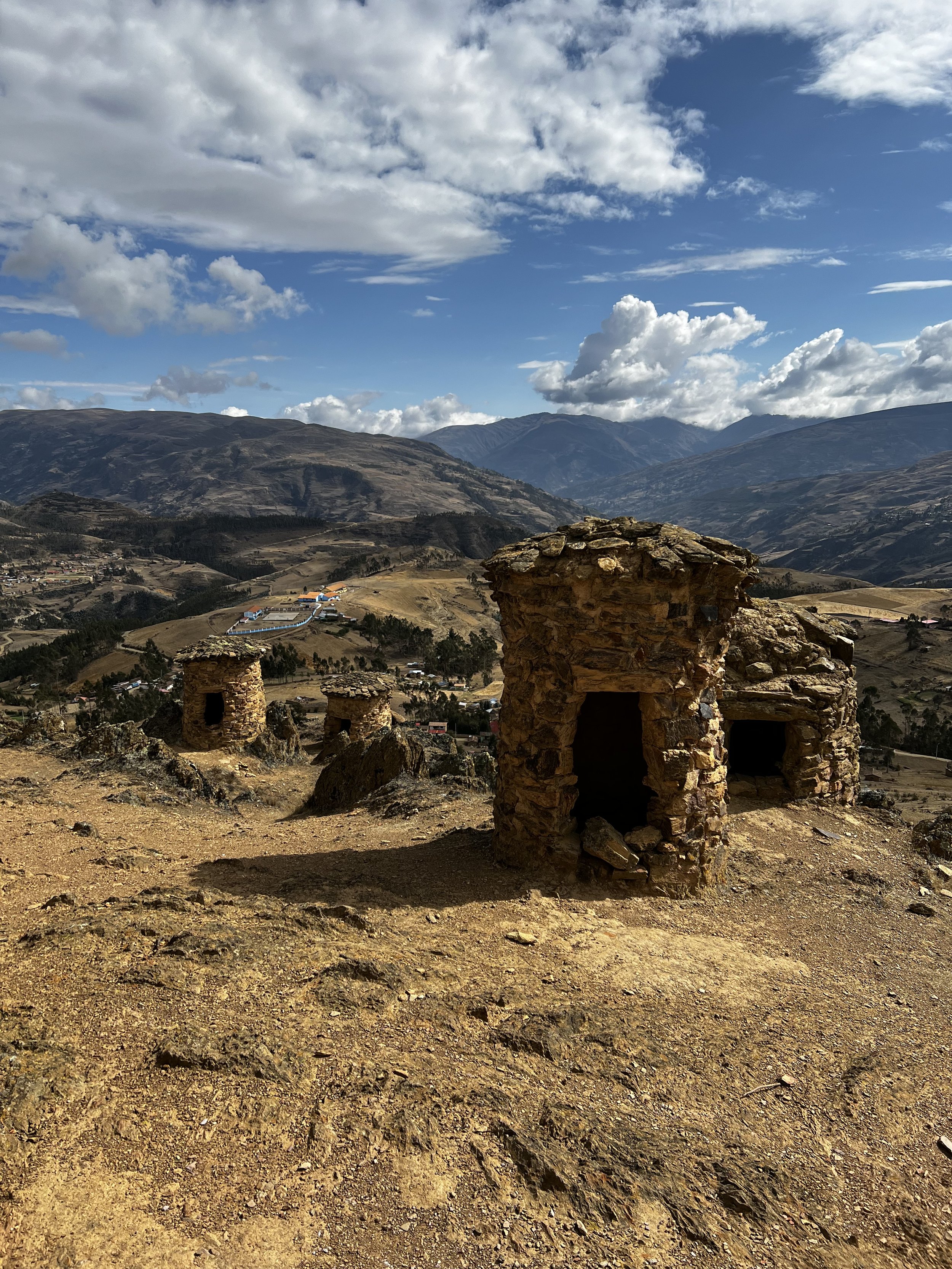
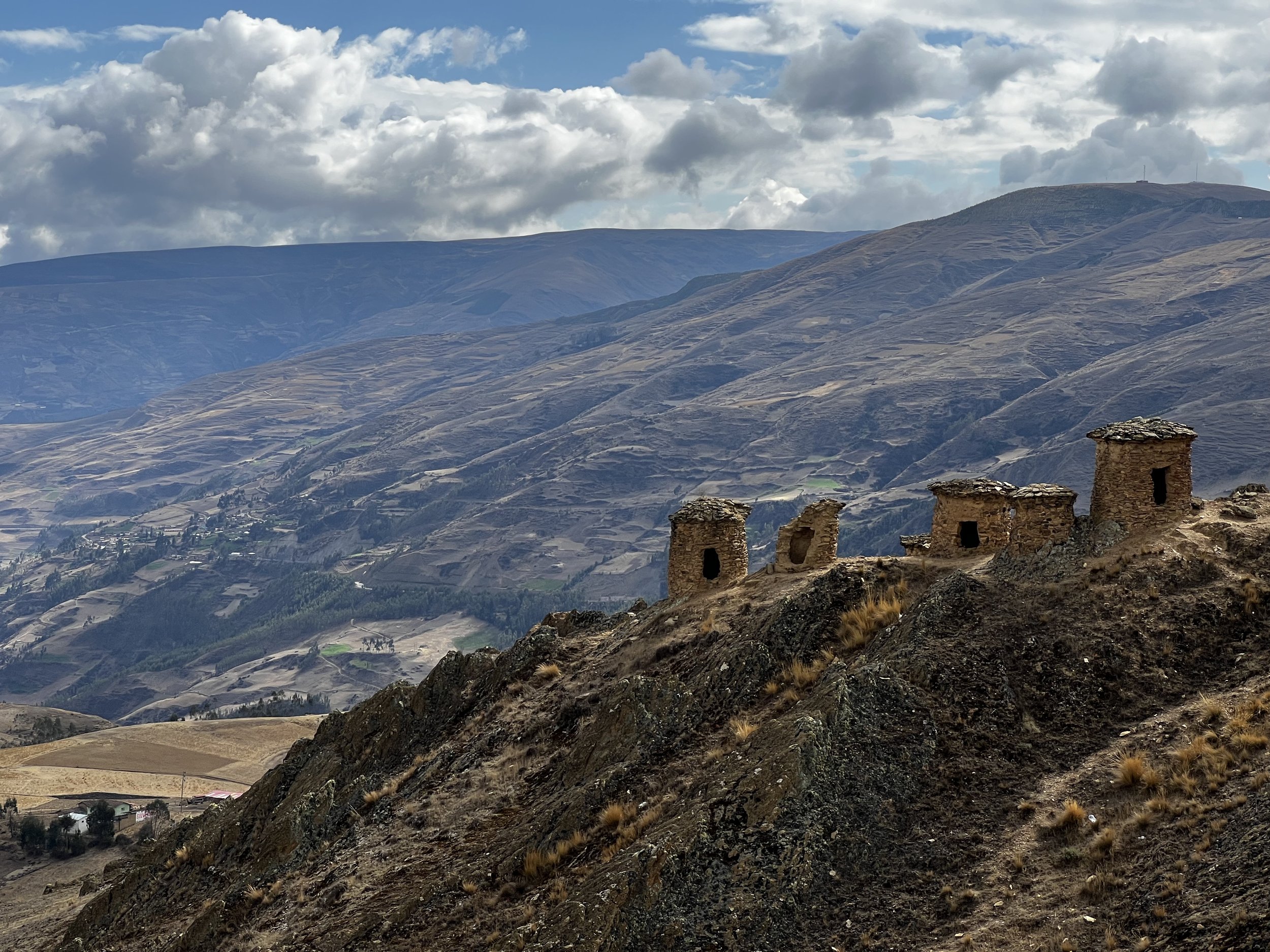
One of my favorites was Chullpas de Ninamarca, a fascinating archaeological site tucked into the mountainside. Long before the Inca Empire, the Lupaca people built these cylindrical stone burial towers to honor their dead. Standing among structures that have watched over the valley for centuries was an unexpected reminder of just how much history exists beyond Machu Picchu.
As we continued climbing, the landscape gradually transformed until we reached Acjanaco Pass, the official gateway to Manu National Park. At over 11,600 feet, it marks the point where the dry Andes suddenly give way to the lush cloud forest below. Looking down from the overlook, it felt as though an entirely different world had unfolded beneath us.
The cloud forest quickly became another highlight of the drive.
Everything was draped in moss. Waterfalls spilled down towering cliffs, orchids clung to tree branches, and thick fog drifted between the mountains. The ecosystem here is incredibly fragile, serving as the transition between the high Andes and the Amazon Basin. It's also home to countless species of birds, including Peru's national bird, the brilliant Andean cock-of-the-rock, as well as woolly monkeys, hummingbirds, and dozens of orchids.
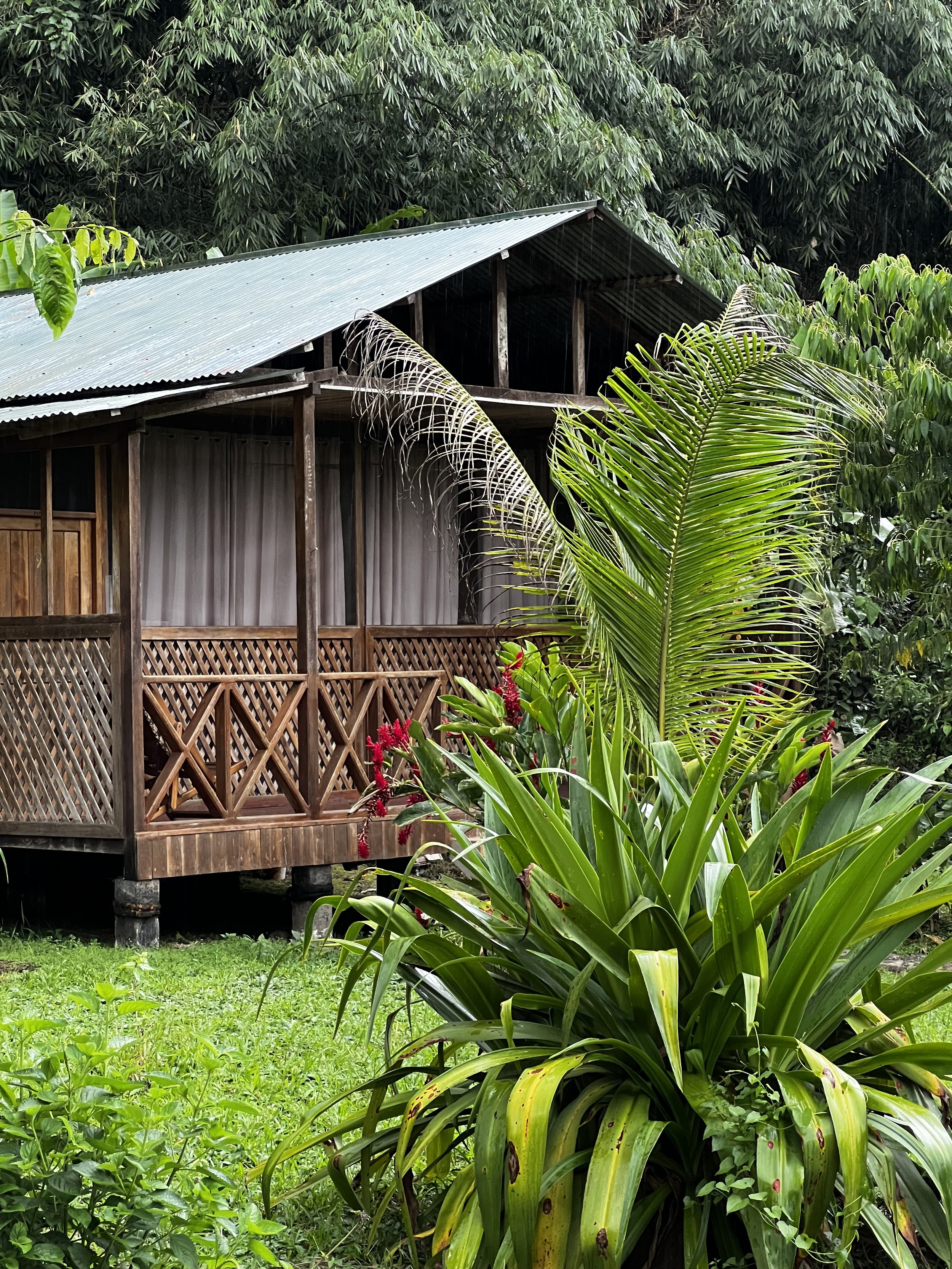
By late afternoon, we arrived at Guadalupe Lodge.
To our surprise, we learned that for the next two nights we would be the only guests staying there.
It felt like having an entire rainforest lodge to ourselves.
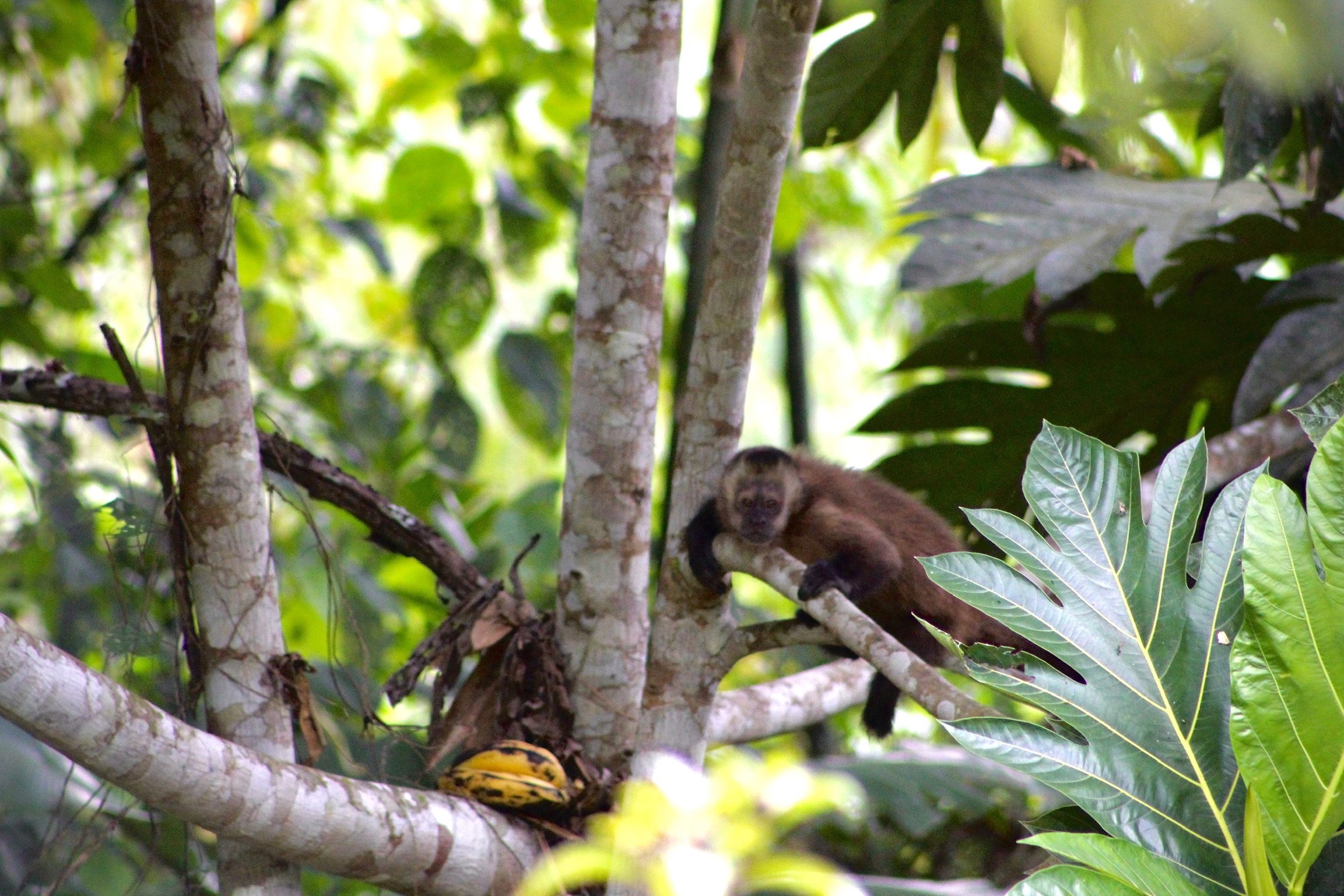
Waiting to welcome us were several white-fronted capuchin monkeys, who clearly knew our guide well. He handed them bananas while they scampered around the property, completely unfazed by our presence. Monkeys have always been one of my favorite animals, so I was already convinced this place was pretty special.
That evening, after dinner, our real rainforest adventure began.
We pulled on knee-high rubber boots, grabbed flashlights, and followed our guide into the jungle.
What immediately surprised me was the lack of a trail.
I mean, there just wasn't one.
Unlike most hikes I'd done before, this felt more like exploring. Our guide walked ahead with a massive machete, casually clearing vegetation as we followed behind him. I couldn't help but think of Tarzan every time he swung it.
Within minutes, we were completely outside my comfort zone.
The rainforest came alive after dark. Giant spiders, enormous insects, strange frogs, glowing eyes hidden in the brush, and eventually an entire cave filled with bats. Every few steps seemed to reveal another creature I had never seen before.
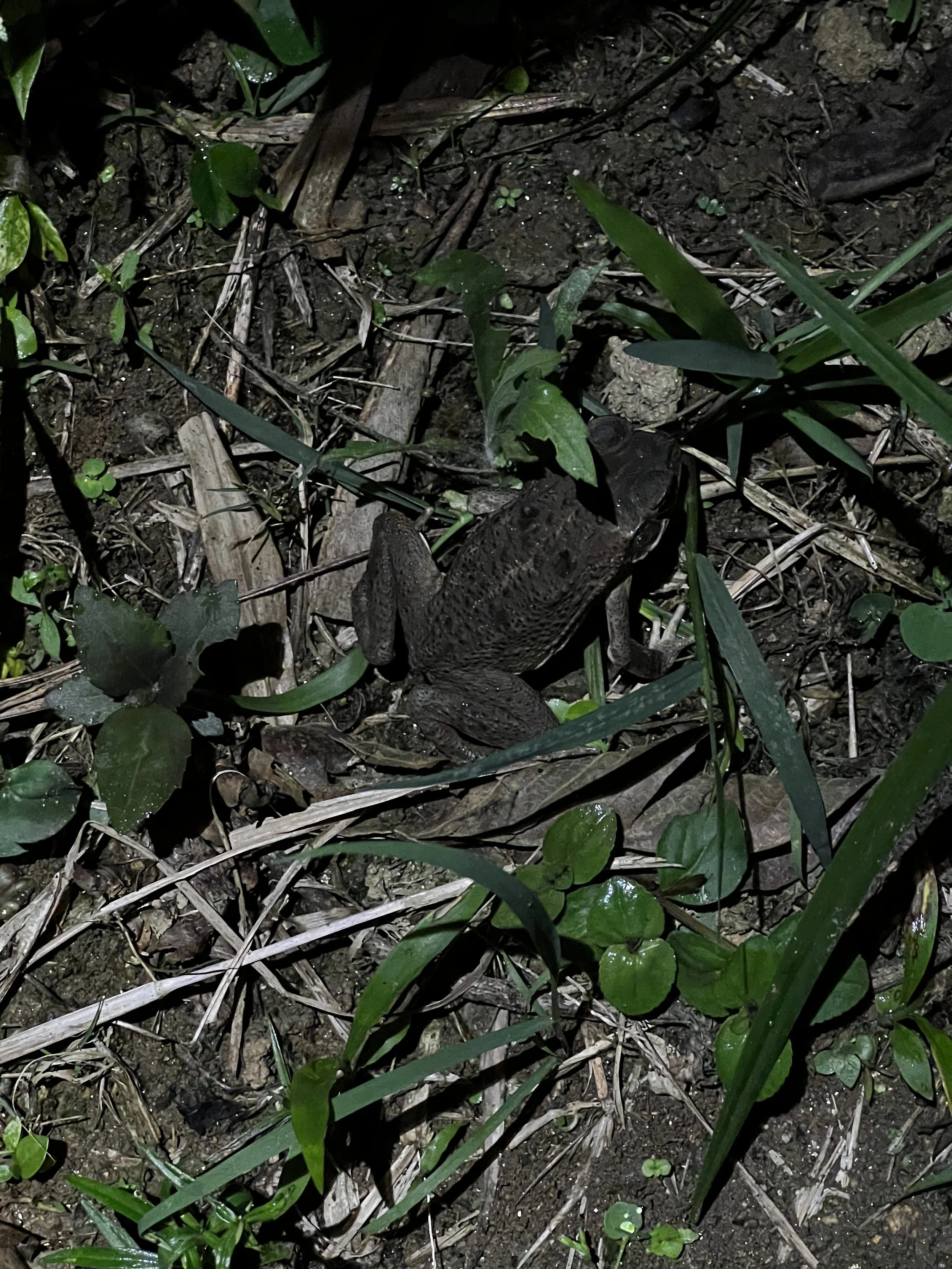
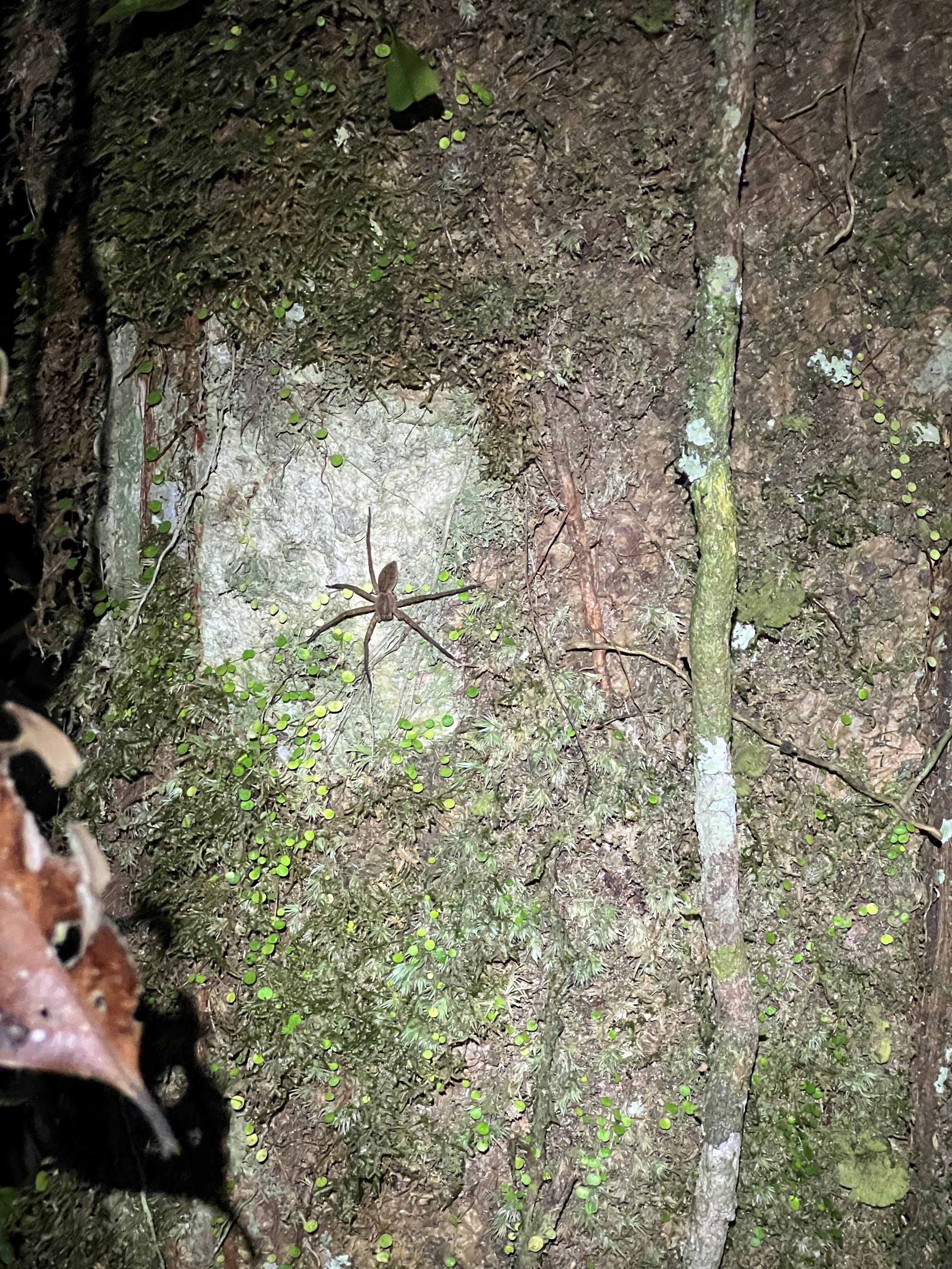
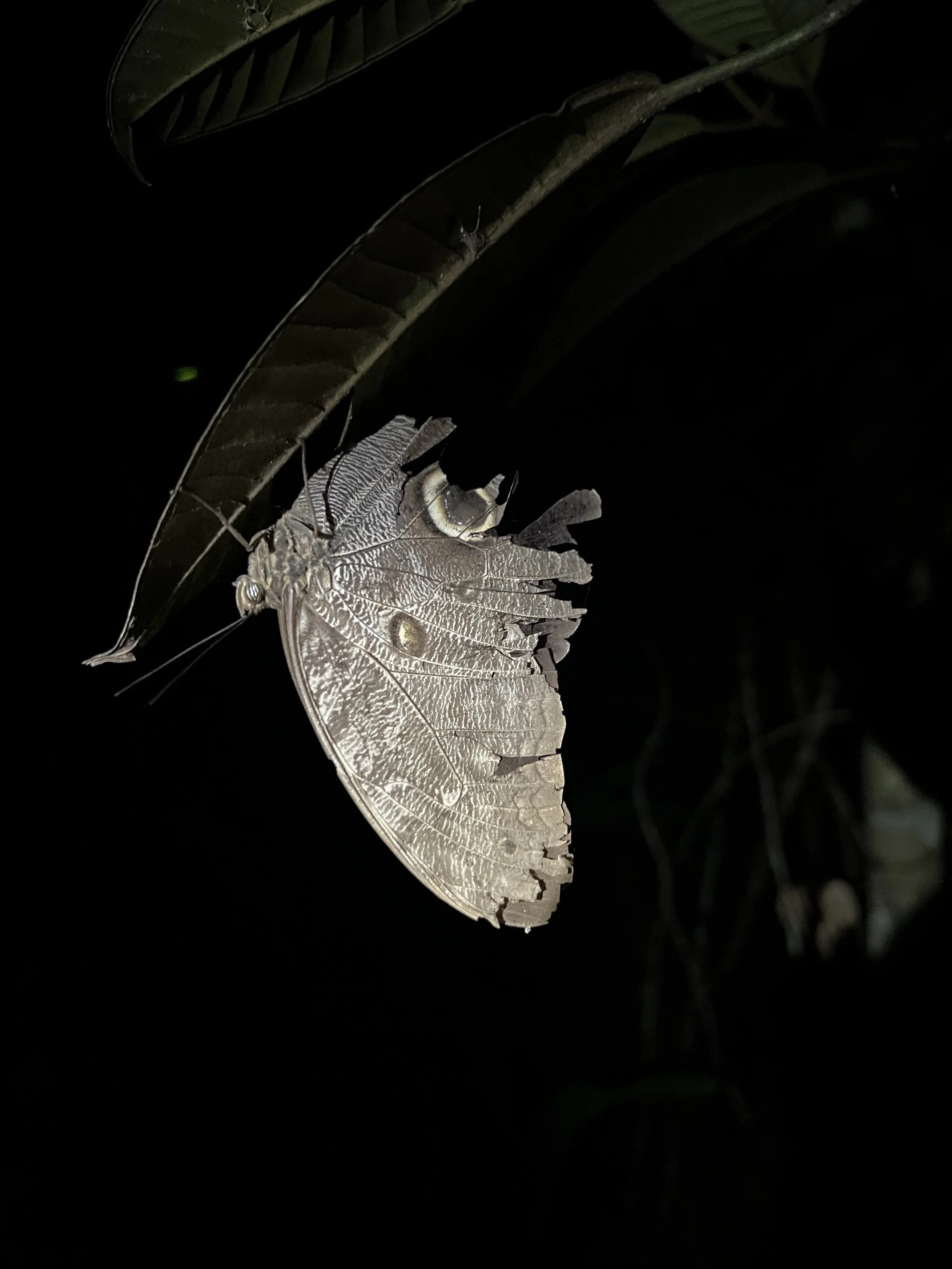
Peru, as a whole, pushed me far outside my comfort zone, but nowhere more than that first night.
Returning to our room, we discovered one final challenge waiting for us.
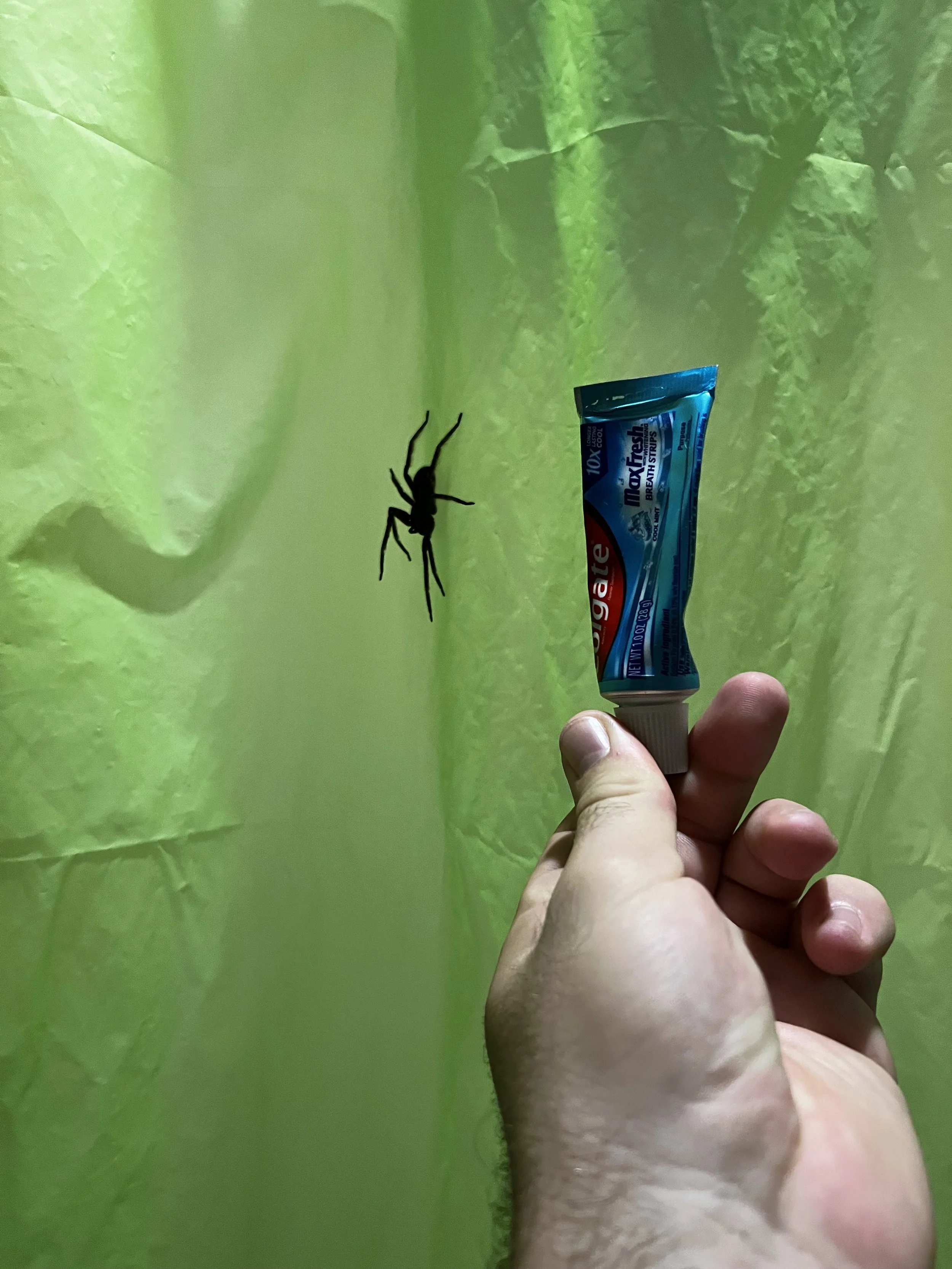
An enormous spider had taken up residence in our bathroom.
While I stood frozen several feet away offering what I can only describe as emotional support, my boyfriend calmly trapped the spider in a container and released it outside.
The next morning we proudly told our guide about our successful spider relocation.
He laughed.
Then informed us it was highly venomous and that we probably should have gotten him instead.
Good to know.
With night one successfully behind us, we ventured deeper into Manu the following morning.
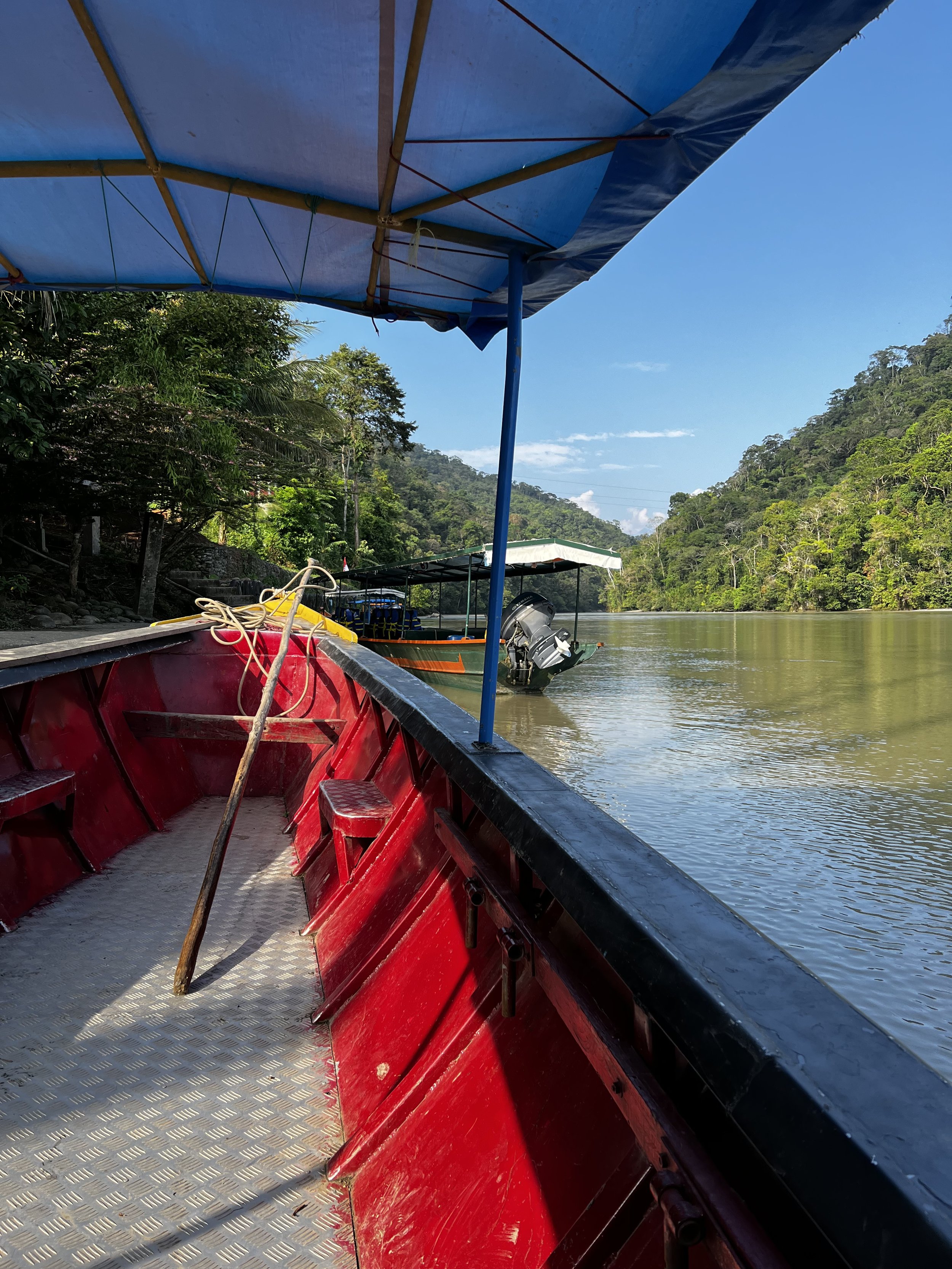
Headed out onto Madre de Dios River
After driving to the port, we climbed aboard a small motorboat and headed down the Madre de Dios River, one of the Amazon's major tributaries. Towering rainforest lined both banks while colorful birds darted overhead. The farther we traveled, the more remote everything became.
One of the day's highlights was Laguna Machuwasi, an oxbow lake tucked away from the main river. We crossed it on a simple wooden raft, drifting quietly through wetlands alive with birds, monkeys, caimans, and countless other species. Among the many birds we spotted was Peru's national bird, the Andean cock-of-the-rock, famous for its brilliant orange plumage and fan-shaped crest. The males are known for their elaborate courtship displays, gathering in groups called leks to compete for the attention of females. It was one of those places where every direction seemed to reveal something new, making every slow paddle across the lake feel like a wildlife safari.
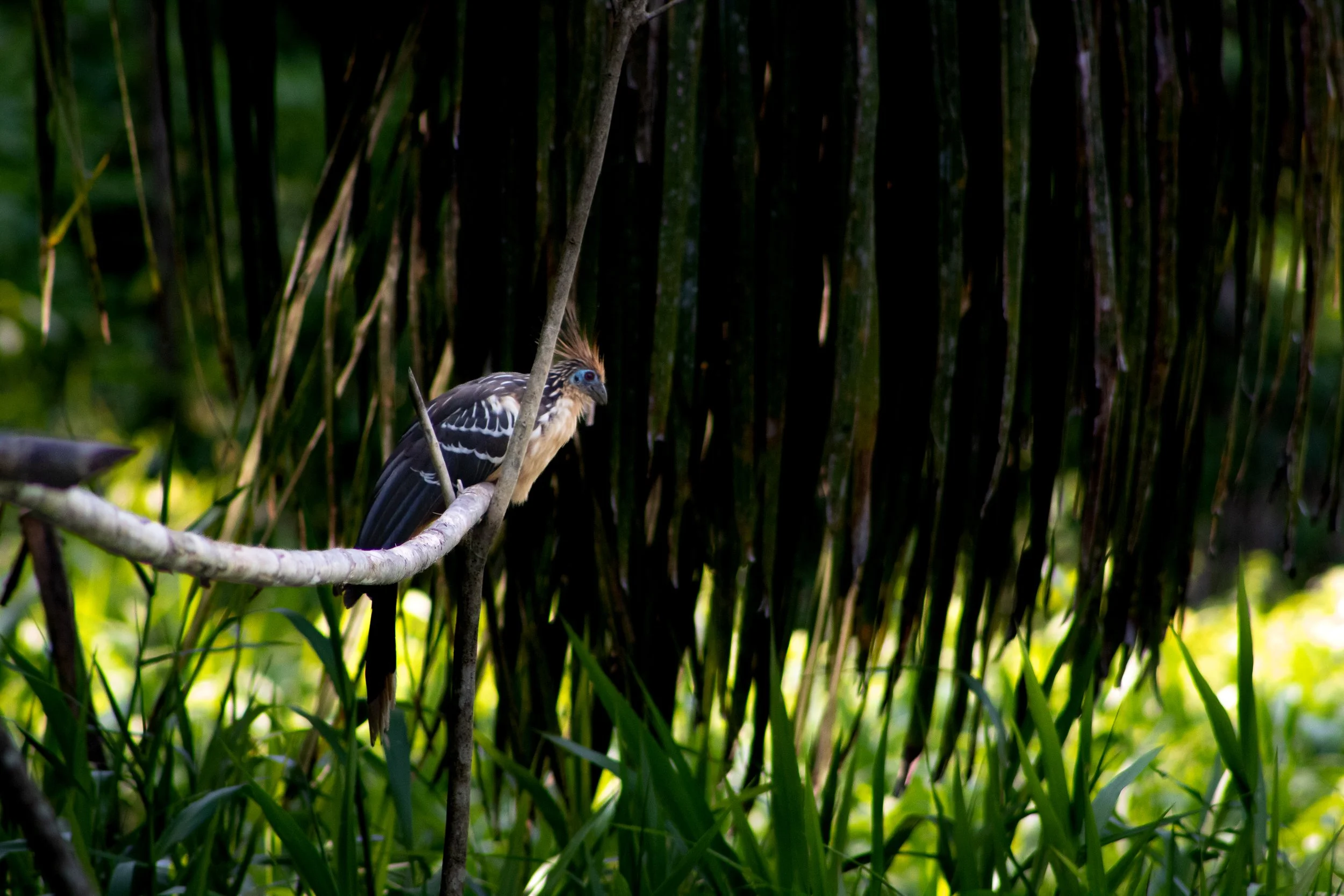
Andean cock-of-the-rock
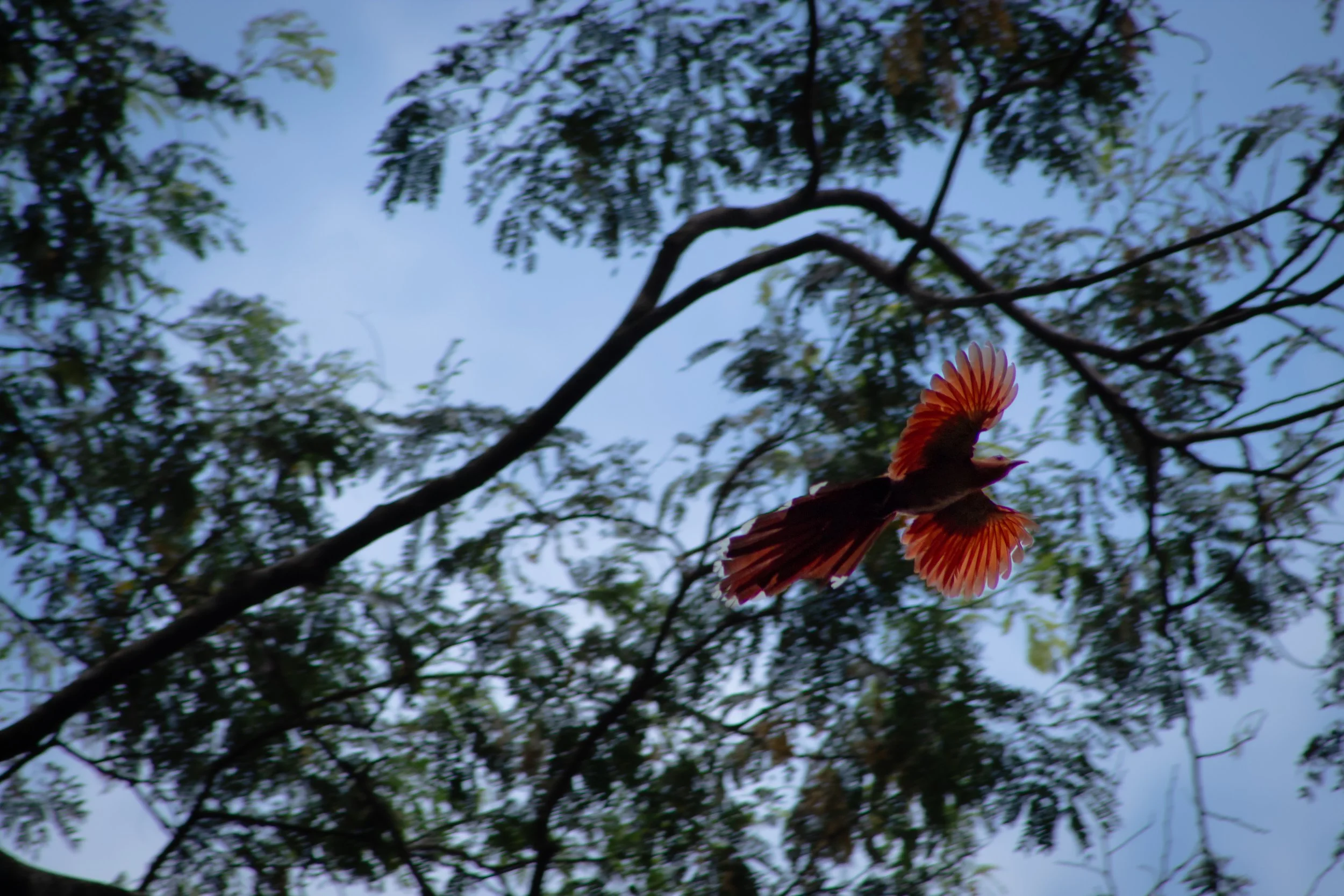
Macaw flying through the Peruvian Amazon
Later that afternoon we visited a local medicine man.
It was...
interesting.
He spoke very little, instead allowing the plants themselves to tell the story one may say. Later that evening I found myself reading about traditional Amazonian plant medicine. For thousands of years, Indigenous communities throughout the Amazon have relied on the rainforest as both pharmacy and spiritual guide. Plants such as Ayahuasca have long been used in ceremonial healing rituals under the guidance of experienced shamans, while others, including Dragon's Blood, are prized for their medicinal properties and are still used today to treat wounds and inflammation. Whether or not someone chooses to participate in those traditions, learning about the relationship between Indigenous communities and the rainforest offered a fascinating glimpse into a worldview very different from my own.
Before returning to the lodge, we stopped at a small wildlife conservation center caring for rescued animals that could no longer survive in the wild. While bittersweet, it was encouraging to see the work being done to rehabilitate and educate visitors about the incredible biodiversity of Manu.
Looking back, I think this trip introduced me to an entirely different side of travel.
It wasn't polished.
It wasn't luxurious.
It wasn't always comfortable.
But it was deeply immersive.
If I'm being completely honest, I do think there are probably more in-depth ways to experience Manu National Park. The drive from Cusco is long, nearly eight hours each way with stops, and I found myself wishing we had spent more time exploring the rainforest itself and less time in the car.
That said, I wouldn't change one thing about our guide.
His passion for the rainforest was contagious. He could identify birds by sound, imitate monkey calls so convincingly they answered back, and seemed to notice wildlife that the rest of us would have walked right past.
My favorite moment came on the drive back to Cusco.
High in the trees, a family of woolly monkeys moved effortlessly through the canopy. A mother carried her baby across the branches while the rest of the group followed behind. We pulled over and simply watched them for several minutes.
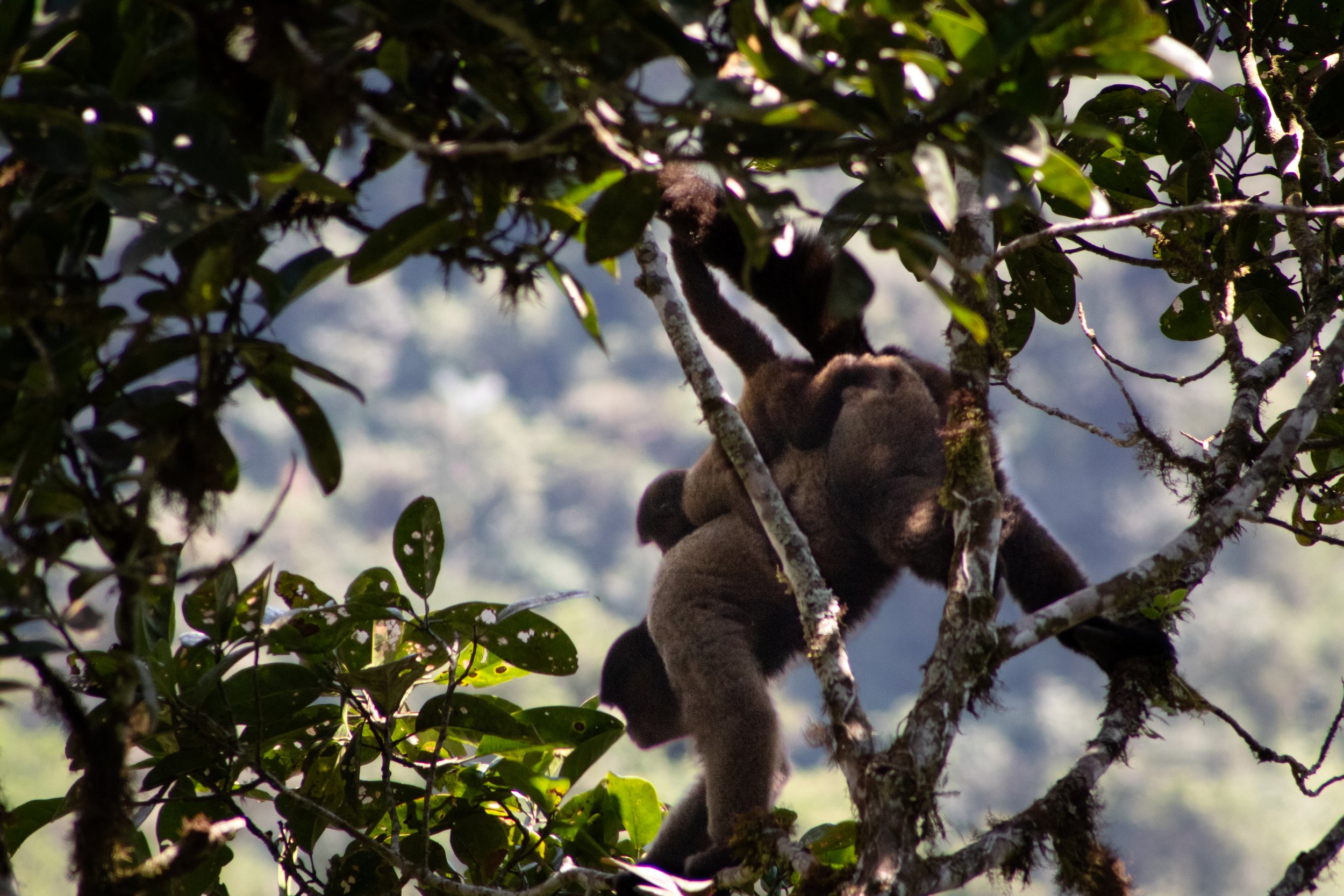
I've always loved monkeys.
Seeing them truly wild, exactly where they belonged, felt incredibly special.
And then there were the stars.
Far from cities and light pollution, the night sky over the Amazon seemed endless. Thousands upon thousands of stars stretched from horizon to horizon, reminding me once again just how small we really are.
Peru challenged me in ways I never expected.
It pushed me physically in the Andes, mentally in the rainforest, and emotionally through experiences that constantly reminded me how much there is left to learn about the natural world.
Looking back, that's exactly what made it unforgettable.
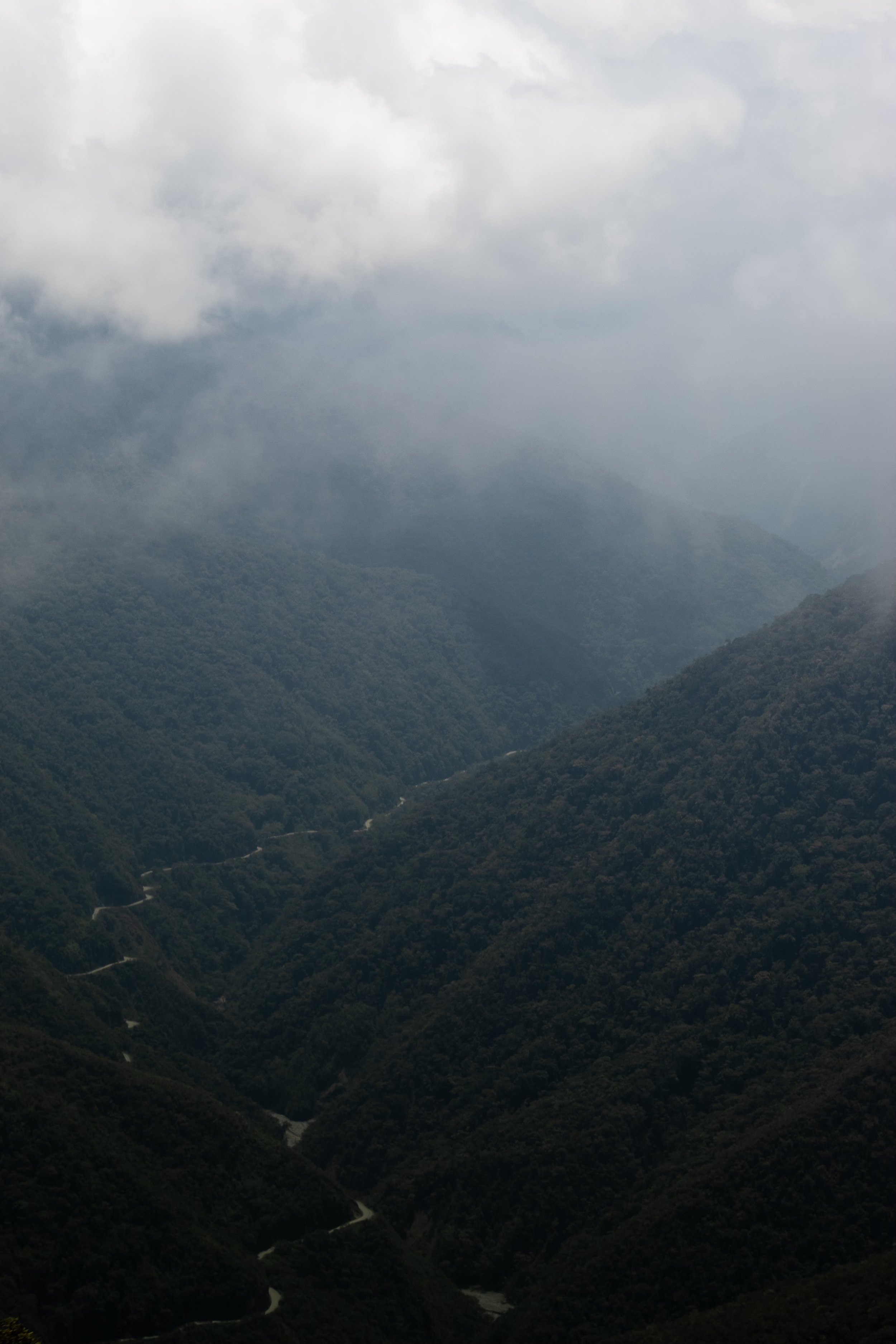
The road into Manu National Park